
Increase productivity
Give your teams back the time spent on repetitive tasks.
Preparing a document from scattered paperwork or answering the same question for the tenth time takes hours every week. We hand the repetitive part of the work to AI, and your people keep the decision.

Before
Documents prepared by hand
A report, a reply or a summary gets built by copying information from several sources.
The same questions every week
Experienced staff answer their colleagues' questions instead of moving their own work forward.
Checks that pile up
Every document received has to be read and compared with an existing record, so the backlog grows as soon as volume rises.



A real example: budget tracking at Cineride Log.
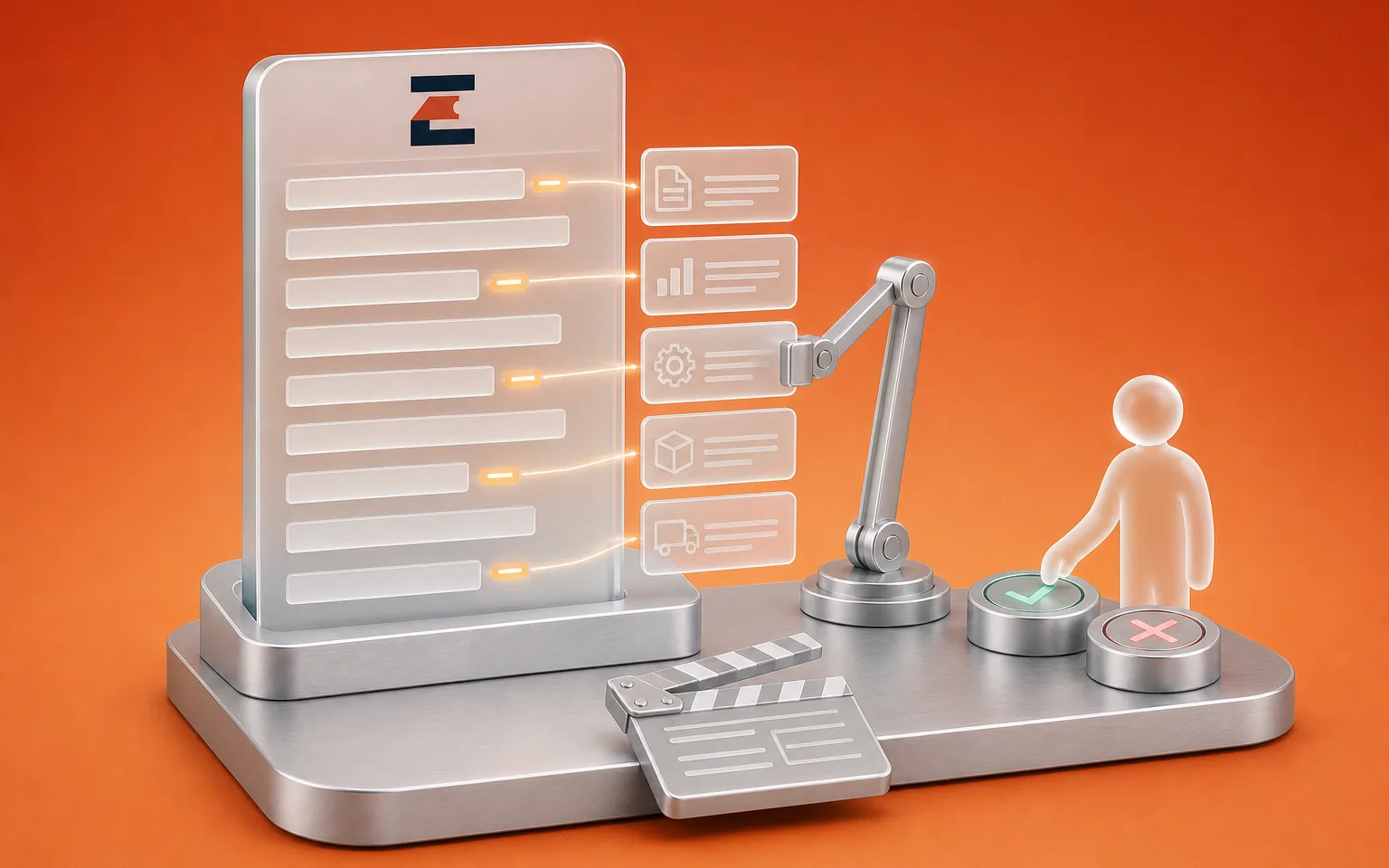
Cineride Log provides transport for film shoots. Every supporting document received has to be matched against the production's budget, and the company wanted a tool to take on that reading.

After
AI prepares, the budget department decides.
Intake
Incoming documents are gathered in one place, whatever order they arrive in.
Reading
Each document is read and compared with the production's budget.
Proposal
An adjustment is proposed, with the document that supports it.
Decision
The budget department accepts or rejects each proposal from its back office.

So the decision stays with the team, which sees the source document for every proposal. The reading and matching, on the other hand, are no longer done by hand.
Our work, from observation to daily use.

Watch the real work
We spend time with the people doing the task, to spot what repeats and what really needs their judgment.
Choose the tasks
We keep the ones where the time saved outweighs the review time, and set the others aside.
Build and test
We connect AI to your documents and tools, then test it on real cases with the future users.
Support adoption
We train the teams, listen to their feedback and adjust the tool over the first few weeks.
What you need to bring.
A tool nobody uses saves no time. So we involve the people who will do the task from the start, and we count their review and training time in the calculation.

Willing users
A small team ready to test the tool on its real work and say what doesn't work.
Good examples
A few documents or replies your teams consider well done, to serve as a reference.
Access to sources
The documents and tools the task needs, with each user's access rights.
A review rule
What has to be reviewed before it's used, and by whom.
How we measure the time saved.
We measure the time spent on the task before and after, review included, the share of proposals accepted without correction and the number of people who actually use the tool each week. A gain shown without the review time would be misleading, which is why every measurement includes it.
Cineride Log
Film production transport
- Challenge
- Keeping a production's budget up to date from the documents received.
- What Claro built
- A tool that compares incoming documents with the budget and proposes sourced adjustments, which the budget department accepts or rejects.
NYS
Store network
- Challenge
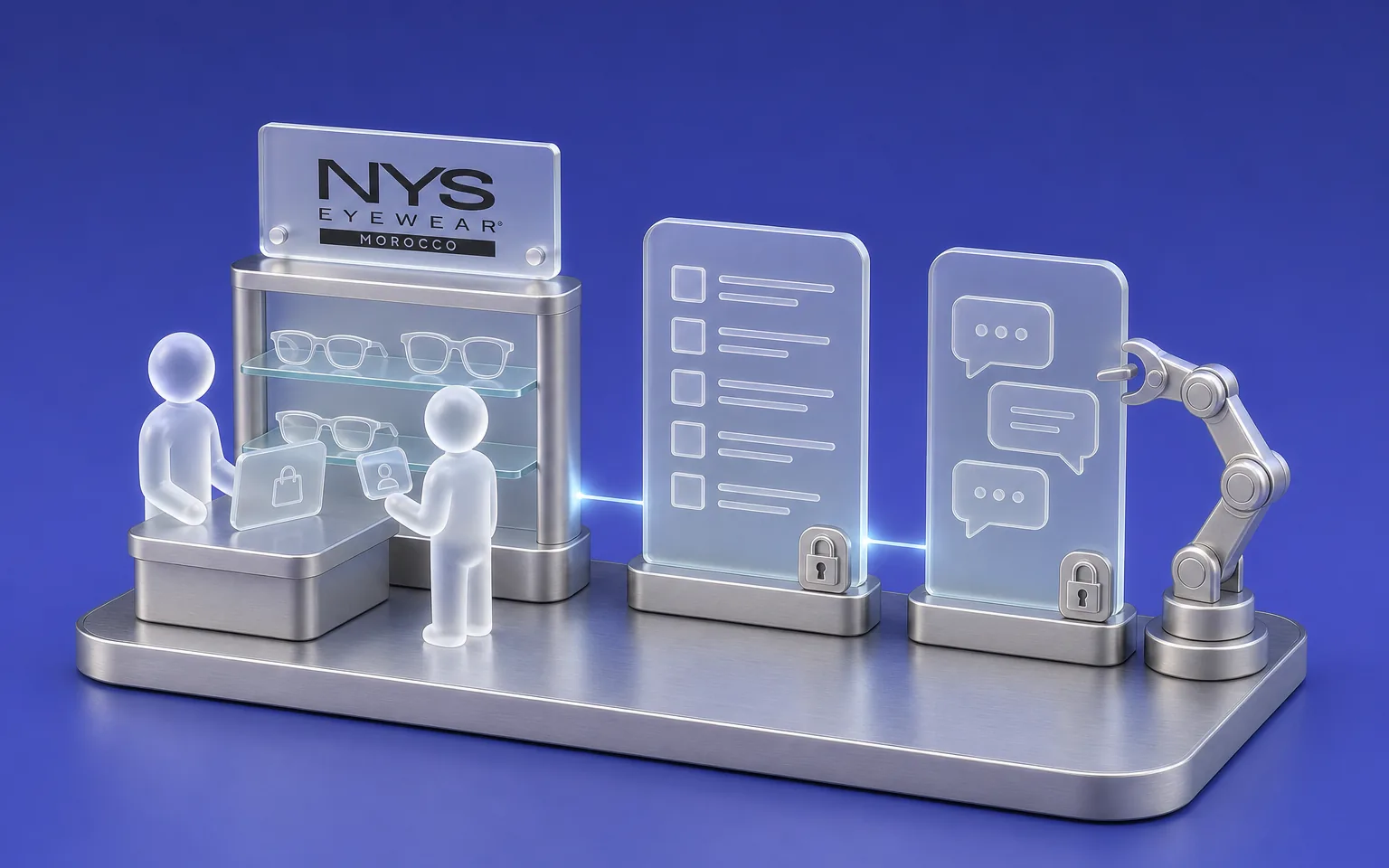
- Giving managers a quick answer about their sales and stock.
- What Claro built
- A French-language AI copilot that answers within each user's access rights, and a weekly report for the network and each store.
FAQ
Frequently asked questions
Which tasks should we hand to AI first?
We start with frequent tasks that rely on documents or information you already have, and whose output is quick to review. Preparing a summary or matching a receipt against a budget fits that description. A decision that commits the company, on the other hand, stays with a person.
Will AI replace some jobs?
We design these tools to remove the repetitive part of a task, and the person who did it keeps the decision. The time freed up usually goes to work the team kept putting off. That organisational choice is yours, and we discuss it with you from the scoping stage.
How do you control the quality of what AI produces?
A person reviews every proposal until quality is established, with the source shown alongside. We track the share of proposals accepted without correction, so you can see when review can be lightened and on which tasks it has to stay complete.
How much does a project like this cost?
The investment depends on the number of tasks chosen, the documents and tools to connect, the volume handled and the support given to the teams. Model usage and hosting come on top, billed by their providers, either in your name or recharged at cost. So we set the amount after observing the task with you.
What if the teams don't use the tool?
We see it quickly, because actual use is one of the indicators we track every week. A tool that gets abandoned almost always points to a concrete problem, such as one step too many or answers that don't fit, and we fix it with the users themselves.
Let's discuss your priorities
Let's find the tasks to simplify.
Tell us about a task that comes back every week and how much time it takes your teams. We'll work out together whether AI can prepare part of it, and what the review would cost.
- The call lasts thirty minutes, by video.
- You speak directly with a Claro expert.
- Afterwards, we email you the next step we recommend.