
AI Transformation
Turn your AI ideas into an implementation plan.
Many companies have AI ideas, sometimes a pilot, and less often something people use every day. We help you choose the use cases that matter, test them against agreed criteria, then build them into your tools and your teams' work, within the scope you choose.
You may recognise one of these situations.
Several ideas, no priority
Your teams suggest AI uses across several departments, but nobody knows which to tackle first. Their value, feasibility and dependencies need comparing before any budget is committed.
A pilot stuck at the trial stage
An AI tool was tested, showed encouraging results, then never made it into daily work. You still have to decide whether to connect it to your systems, rework it or stop it.
Scattered initiatives
Several teams each use their own AI tools, with their own subscriptions and their own rules on data access. Leadership needs a shared framework and a view of what deserves to be extended.
If you already know which process you want to tackle, these two pages will take you there more directly.
We start from your teams' actual work.
We examine
- The process and its goal
- The information available
- The systems in place
- The people and the constraints
You give us
- Access to the people who do the work
- A sample of documents or data
- A named business owner
A representative sample is enough, so we don't need broad access to your confidential information.
What you receive, and what each part is for.
Included in every engagement
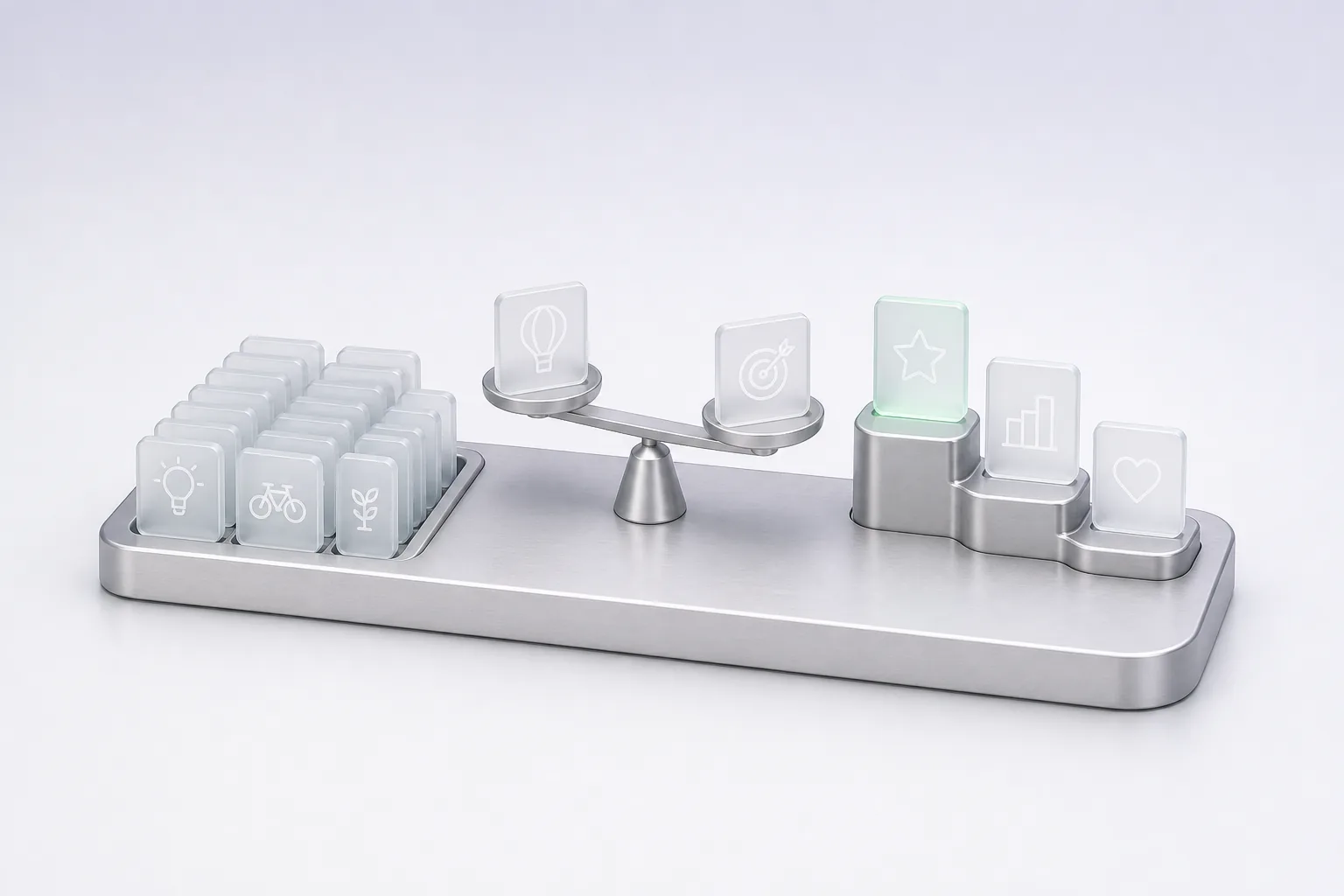
Use-case assessment
Each use case is compared on expected usefulness, feasibility, dependencies and risk. You know which to tackle first, which to prepare and which to set aside.
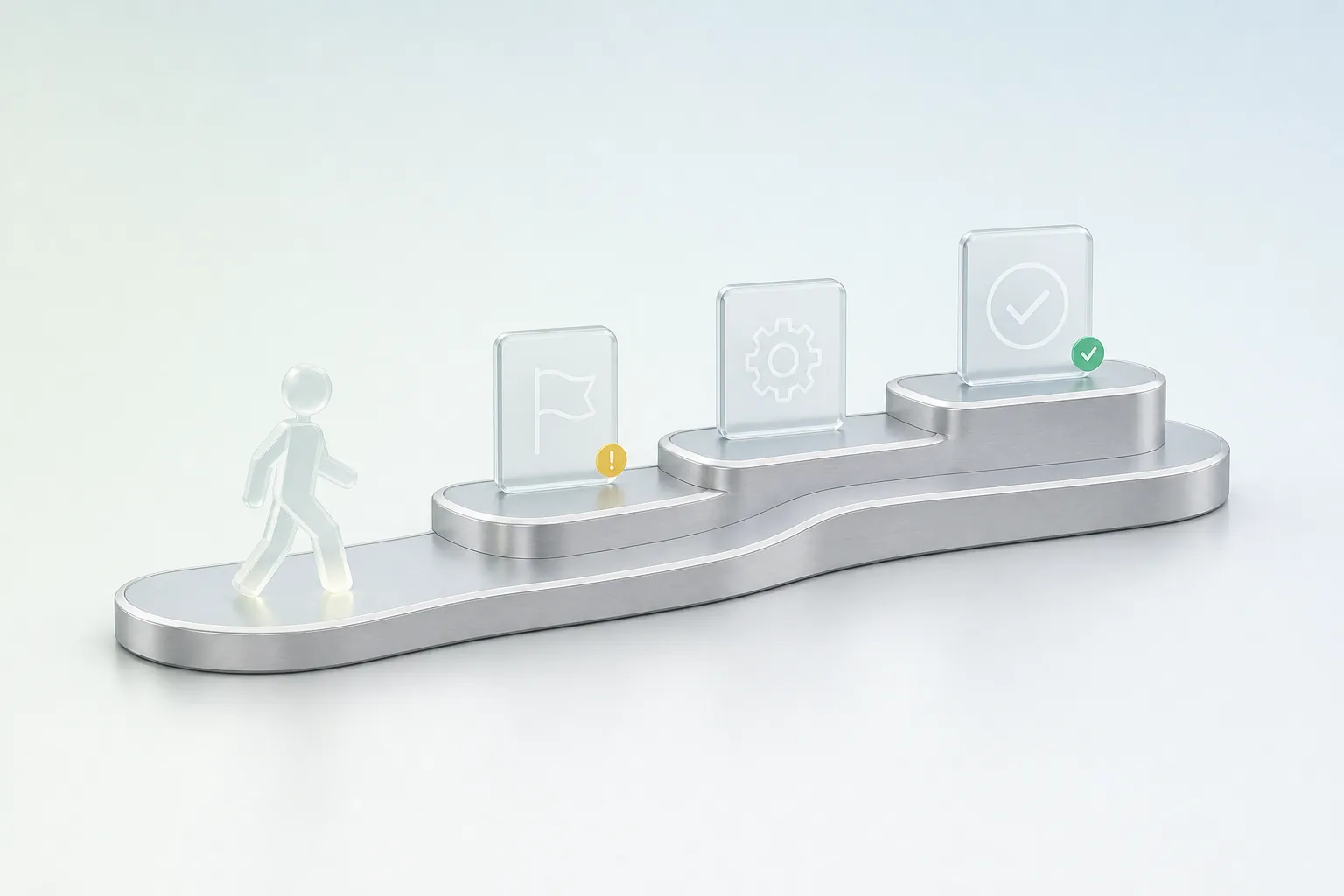
Roadmap
It sequences the work and sets the decision points between stages. It also shows what depends on your data, your systems or your teams.

Pilot brief
It describes the use case under test, its users, the test period and the evaluation criteria, agreed before anything starts. Those criteria let you decide on facts afterwards.
Depends on scope
Building the pilot, the integrations and support for your teams are estimated separately, according to the scope you choose.
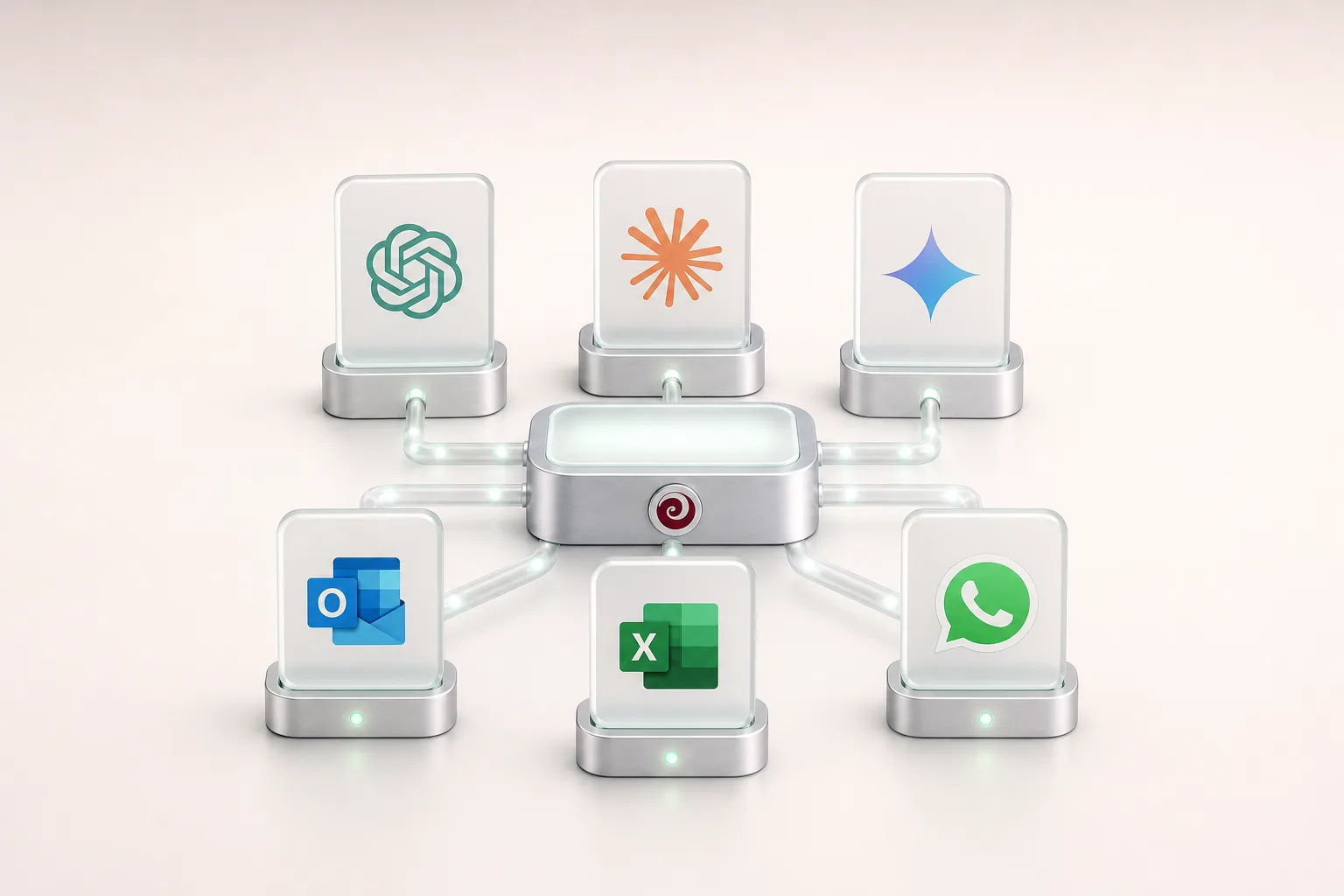
Integration requirements
We set out the systems to connect, the access needed, hosting and follow-up after go-live. This document is the basis for estimating the implementation.
Adoption plan
It names the users, their training needs and the person who owns day-to-day use. It also sets who handles exceptions once the pilot ends.
Four stages, each ending in a decision.
Step 01
Assess
We meet the teams involved, observe the process and analyse a sample of data. You name a sponsor in leadership and a process owner. This stage ends with the list of use cases, compared and ranked.
Step 02 · decision
Prioritise and scope
We choose the first use case to test with you and set its scope, users and criteria. Your IT counterpart approves the access and systems involved, then you decide whether to launch the pilot.
DecisionYou launch the pilotStep 03 · decision
Test and evaluate
The pilot runs on real cases, over an agreed period, with the intended users. We compare the results with the criteria set at the start, and on that basis you decide to rework, continue or extend.
DecisionReworkContinueExtendStep 04 · decision
Integrate and adopt
If you go ahead, we connect the tool to your systems and train the users. We also agree who reviews exceptions and who owns the tool after the pilot, because adoption depends on those rules as much as on installation.
A baseline, a target, then a decision.
Every pilot starts from a measure taken on the process as it runs today. We then set a target and a test period, and compare.
Depending on the case, we track
At the end of the period, you decide
- Rework
- Continue
- Extend
Two systems designed and built by Claro.

Multi-store retail
NYS
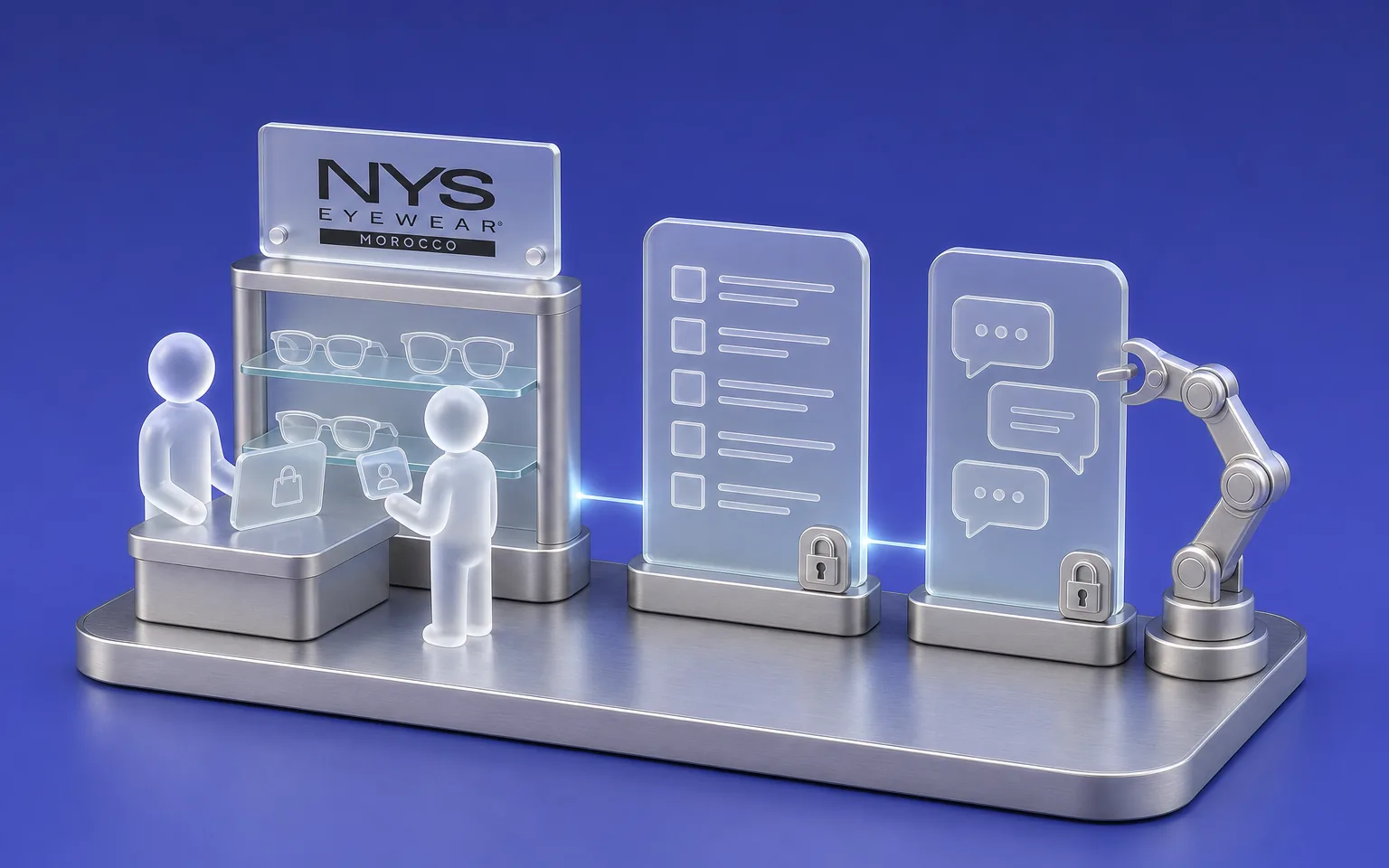
NYS runs more than ten stores and an online shop. The project started with an audit of the existing setup and a decision document, then we designed and built an AI-native retail ERP, module by module. Its copilot answers in French within each user's permissions, so a sales associate doesn't get what management sees. It also flags stock-outs with the action to take and produces a weekly report for the network and for each store.

Film production transport
Cineride Log
For Cineride Log, which provides transport for film shoots, we set a three-layer roadmap at kickoff, then designed a tool that compares incoming documents with the budget and proposes sourced adjustments. The budget department accepts or rejects each proposal from its back office.

Further reading
- AI Project ROI and Cost for Enterprises in Morocco

How to estimate what an AI project brings in, and what drives its cost.
- Cosmetic AI or Load-Bearing AI: The Test

A simple test to tell a useful AI feature from a cosmetic one, before you commit.
FAQ
Frequently asked questions
Can we start with a single use case?
Yes, and it's often the simplest place to start, provided the use case comes up often enough to be measured and someone owns it. The assessment then checks that choice and prepares what comes next. If you already know which process to tackle, we can scope the pilot straight away.
What needs to be ready before we begin?
You need an available business owner, access to the people who do the work and a representative sample of documents or data. Your IT counterpart should also be able to describe the systems in place and how they're accessed. The rest, like the roadmap or the pilot criteria, is built during the engagement.
How do you choose priorities?
We compare each use case on its usefulness to your business, the implementation effort, the quality of the data available and the risks around access. A very useful case that can't be fed with data therefore comes after a more modest one that's ready to test. Data and access questions are covered on our AI Security & Governance page.
What happens after a pilot?
The pilot ends with a decision, taken on the measures agreed at the start, to rework the use case, continue it or extend it. If you continue, we estimate the integration with your systems and the support for your teams. Follow-up after go-live can then fall under our maintenance offer, with a written report each month.
Let's discuss your priorities
Let's identify your AI priorities.
Tell us where you stand, the ideas already on the table and the process that seems most pressing. We'll tell you how we'd approach it and what you'd need to prepare.
- The call lasts thirty minutes, by video.
- You speak directly with a Claro expert.
- Afterwards, we email you the next step we recommend.