
Generative AI
Let AI write the first draft, while your team keeps the review.
Meeting notes, customer replies, report summaries or proposals often follow a format your teams know well. We build into their tools a system that prepares that first draft from your templates and the sources you approve, then submits it to the person in charge. The result therefore becomes part of how you work, instead of staying a demo in a chat window.
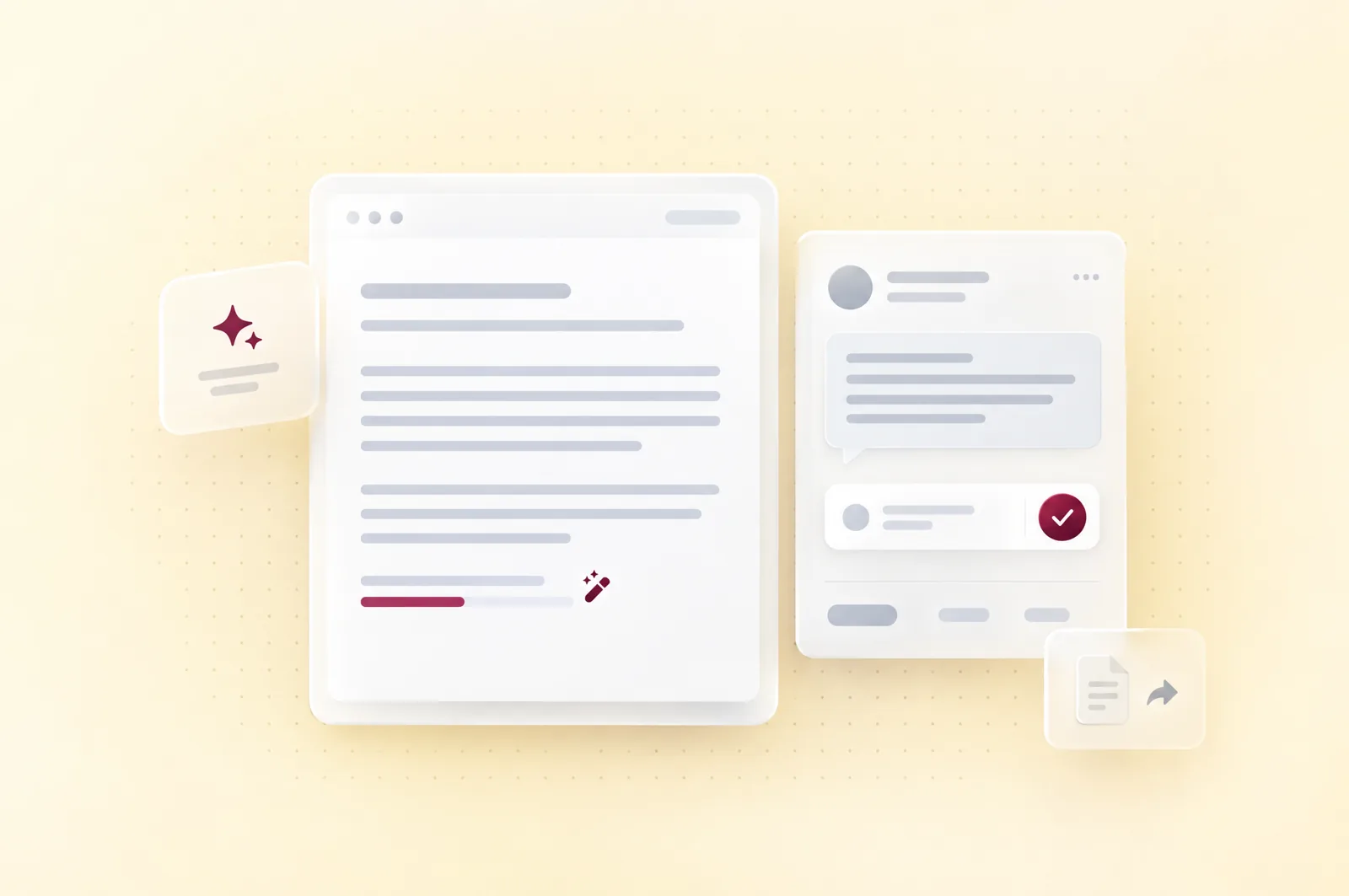
Documents your teams write every week.
Preparing replies to customers
From the customer's file and your standard replies, AI drafts a response, which a team member edits or approves before it's sent.
Summarising a report or a meeting
AI turns a report, meeting notes or an exchange into a summary in your management's format, which its author reviews before sharing it.
Writing documentation
Service notes or specifications become a fact sheet or a procedure in your documentation format, which the relevant expert checks.
A person reviews the output whenever it leaves the team or commits the company, to a customer, a partner or a public authority. A draft for internal use can circulate with a lighter review, under the rules you set.
Illustrative example
From meeting notes to a summary sent out.
Take the weekly meeting of an operations team, whose manager wants to share a summary the same day. The system receives the notes taken during the meeting and the indicators table, then writes a one-page summary in the format management reads every week. It invents no figure, because every number in the summary comes from the table, and it flags the points where the notes contradict the indicators. The manager therefore starts the review with those points, corrects what needs correcting and approves the release.
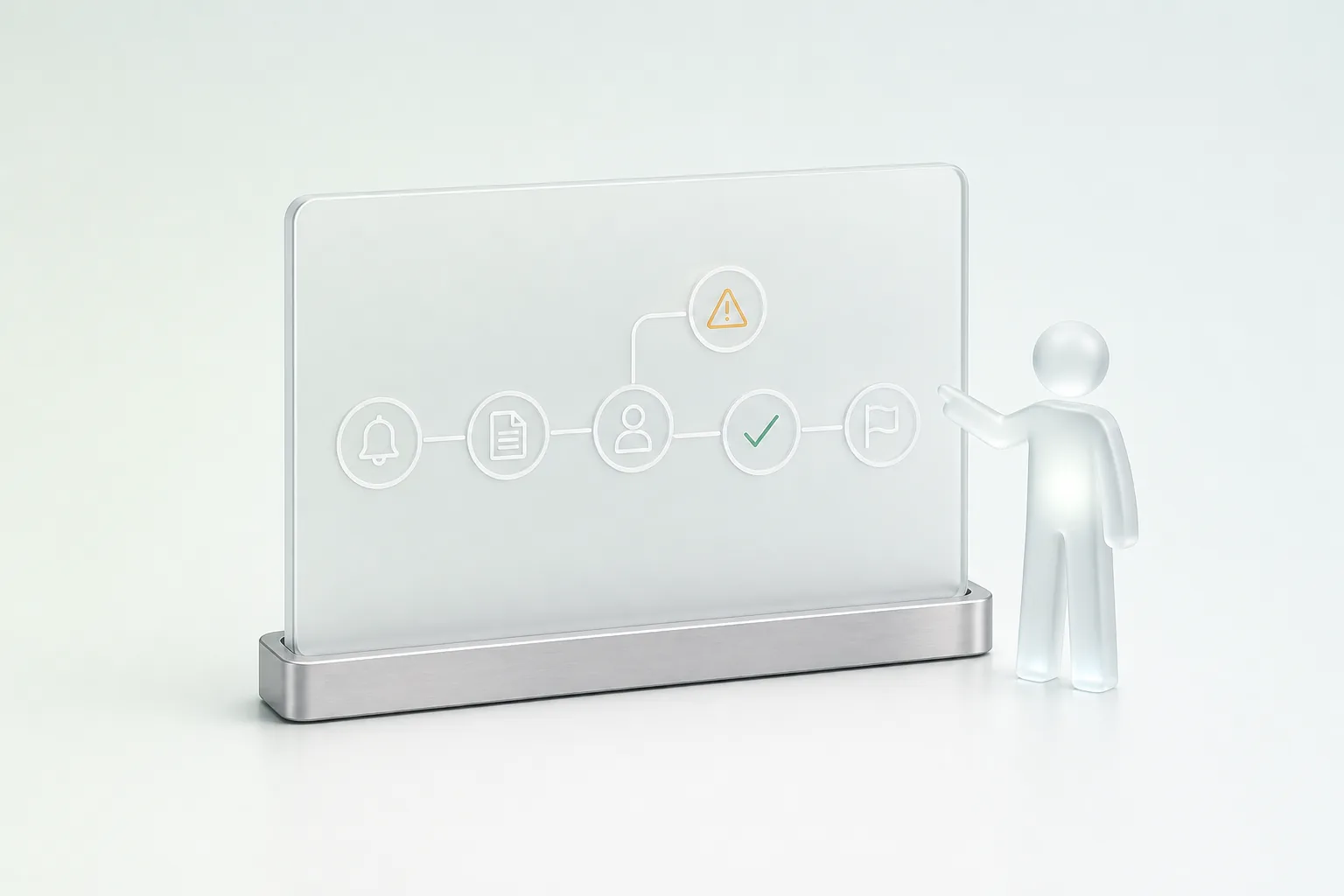
Step 01
Upload
The manager uploads the meeting notes and the week's indicators table.
Step 02
Draft
The system prepares a summary in the management's format, with decisions, open points and risks.
Step 03
Flag
It marks the passages where the notes and the figures don't match.
Step 04
Review
The manager corrects, completes and approves the summary.
Step 05
Share
The approved summary goes to the usual recipients, and its versions are kept.
| Item | In this example |
|---|---|
| Input | The meeting notes and the indicators table |
| Output | A one-page summary with decisions, open points and risks |
| Review | The meeting's manager, before anything is shared |
| Kept | The sources, the draft and the version sent out |
What we put in place for each use.
Use case sheet
It describes the task, the people who use it, the document produced and the person who reviews it. The other deliverables build on it.
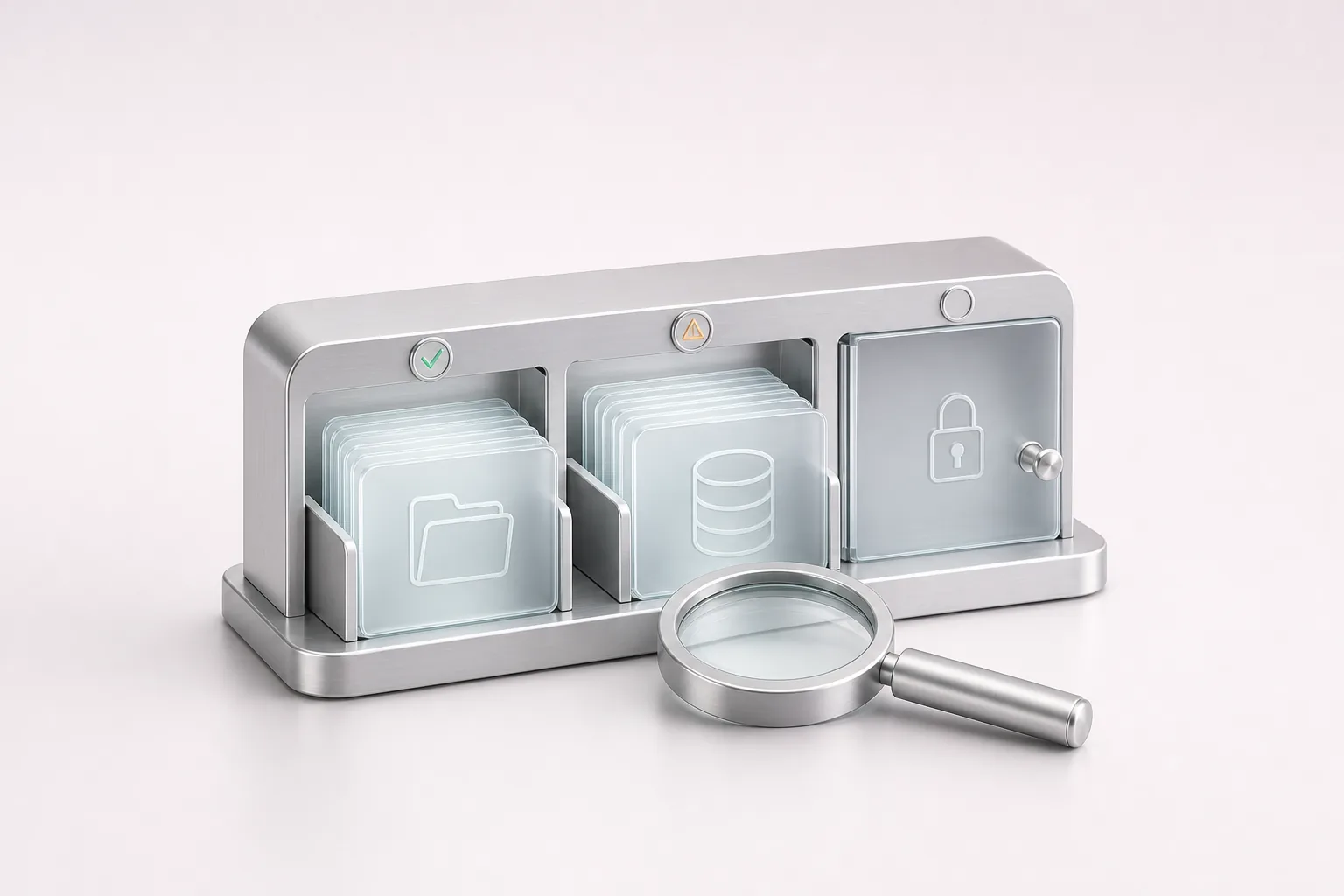
Approved sources
They set, for each use, the documents and data the system may use, within each person's access rights.
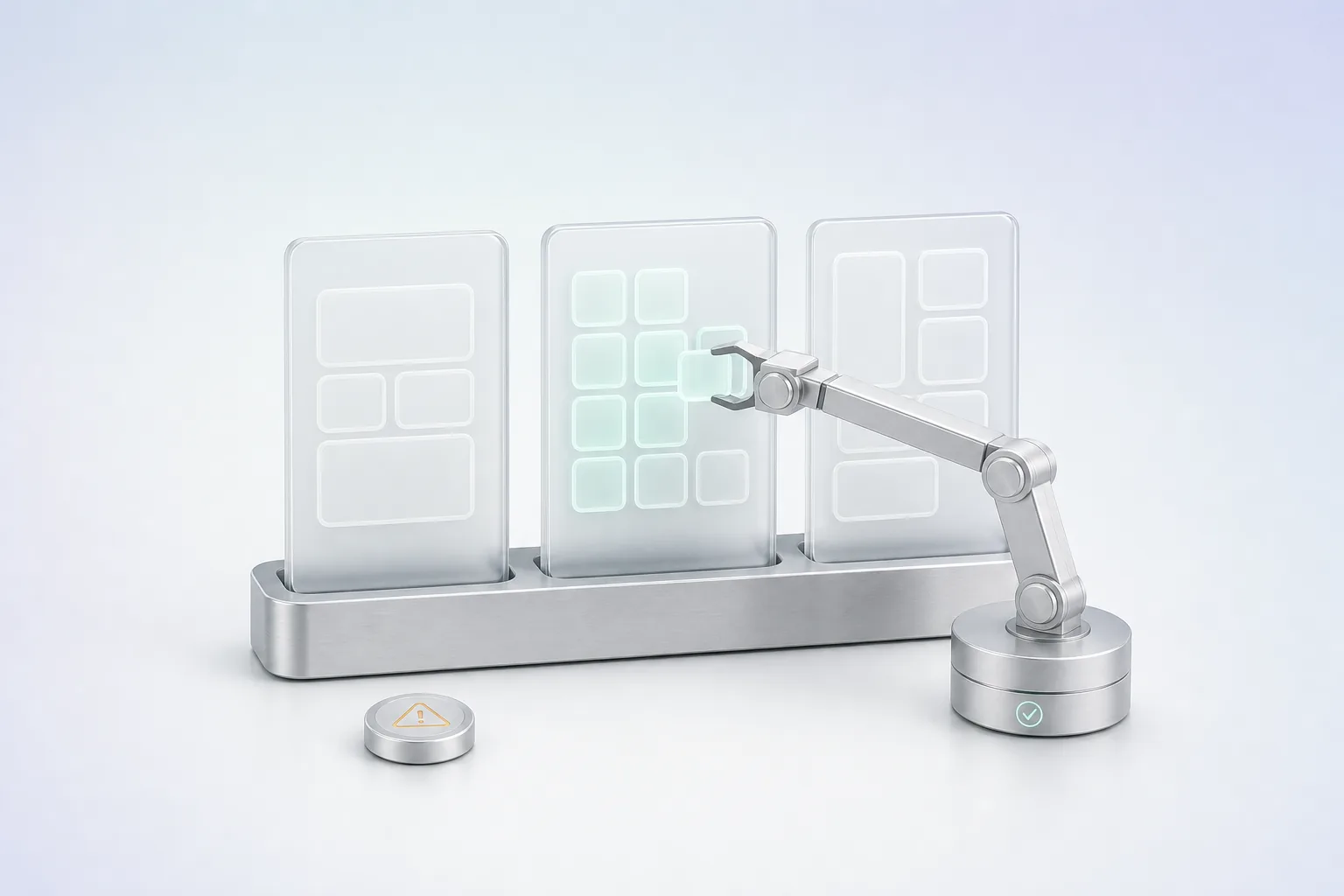
Output templates
They follow the structure, tone and length of your best existing documents, rather than those of a generic template.
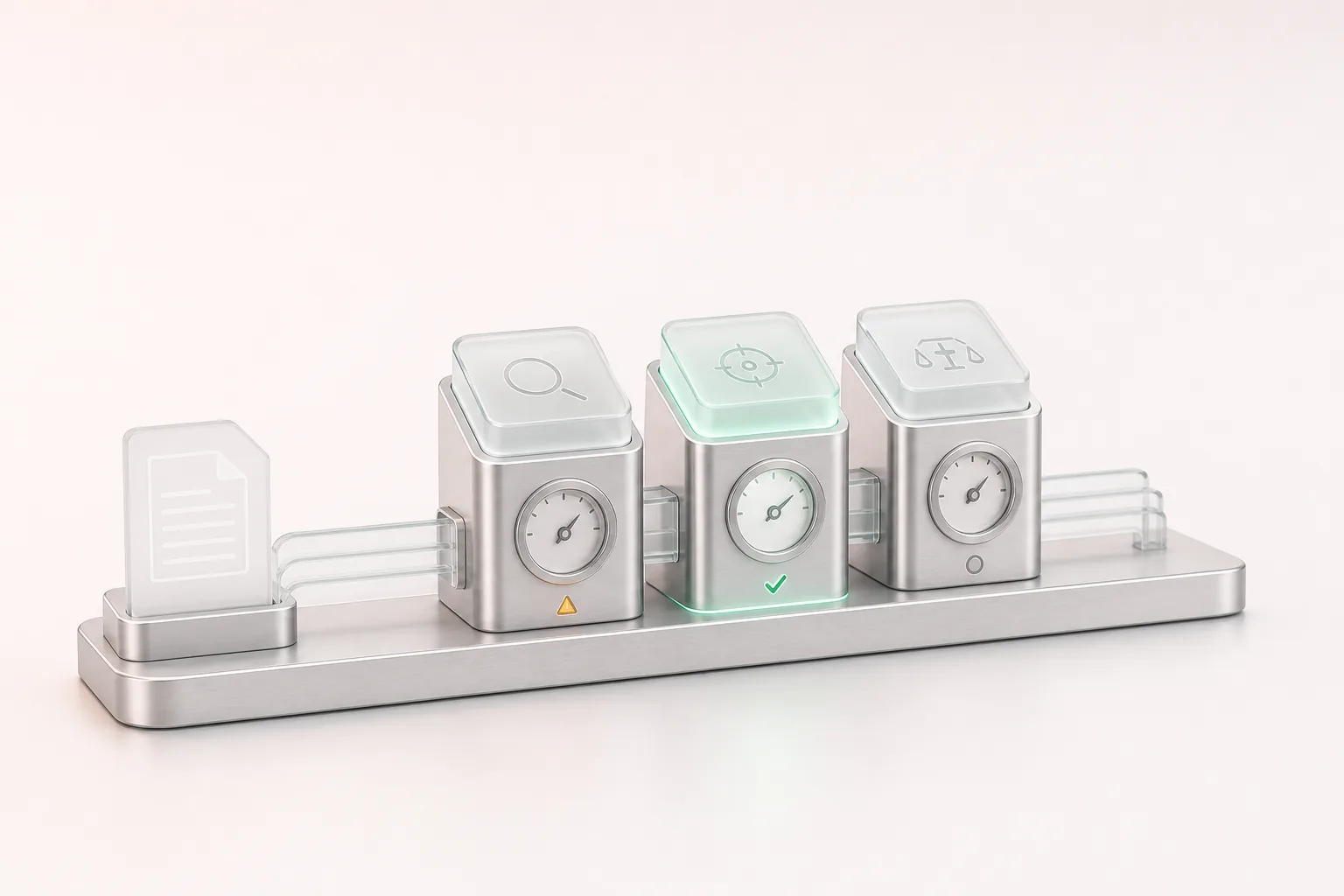
Choice of language model
We choose the model on the quality it achieves on your documents, its usage charges and your hosting constraints, after checking its provider's terms.
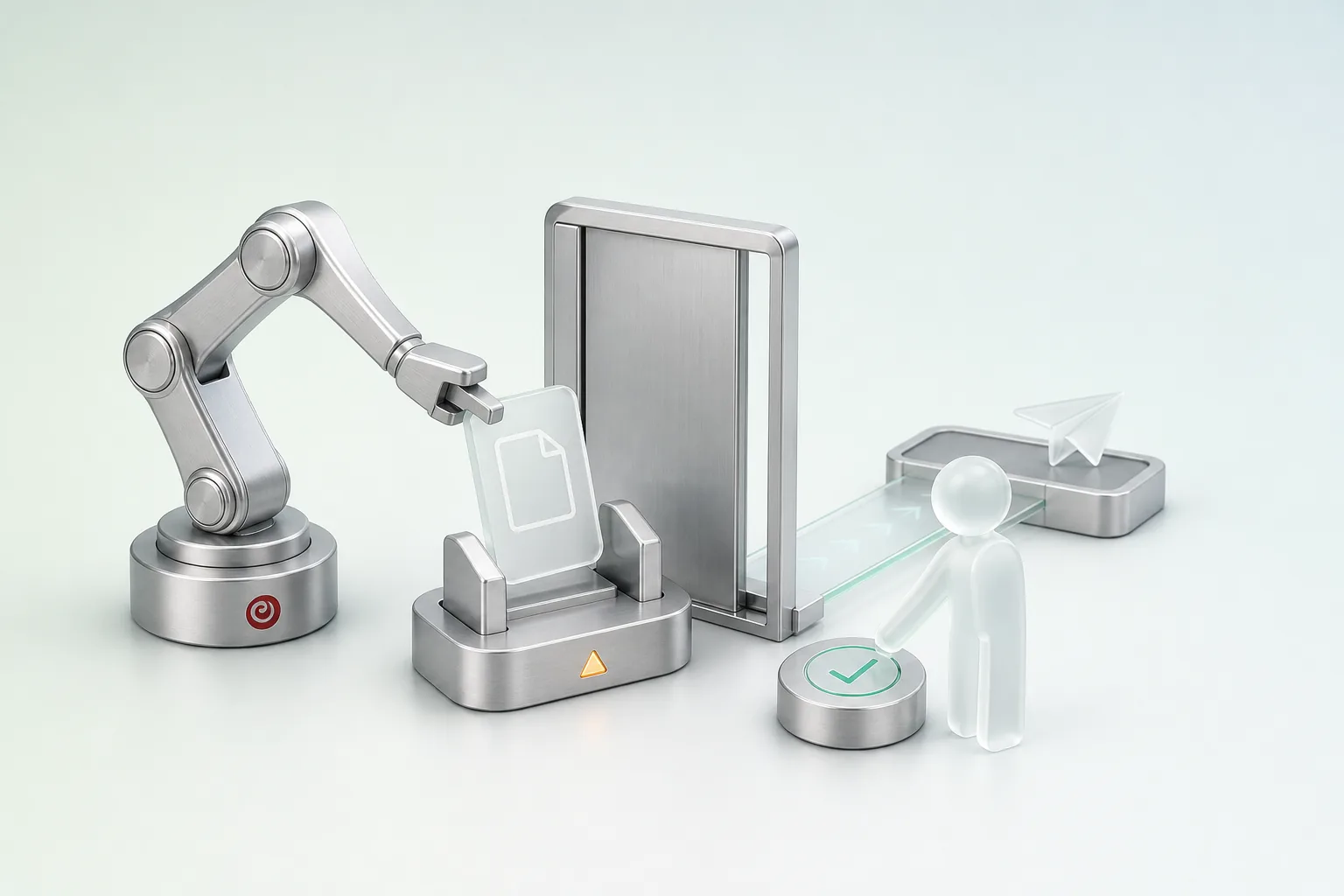
Review workflow
It sets who reviews what, in which tool, and what is kept, from the first draft to the approved version with its author's name.
After go-live, monitoring these uses and adjusting them fall under our Maintenance & Evolution offer, per ticket or as a monthly arrangement with a written report.
Quality measured on your own documents.
Before go-live, we compare the AI's drafts with the final versions your teams would have produced, on a set of real documents. We check factual accuracy, respect of the format and the review time needed, then the same grid is used in service, because a new type of document can lower the quality. Whenever we report a result, we state the number of documents, the period and the method.
An AI draft remains a draft until a person has reviewed it. On a document that engages a lawyer's or an engineer's responsibility, their expertise decides, and the system only spares them the first-draft stage.
Applications in your industry.
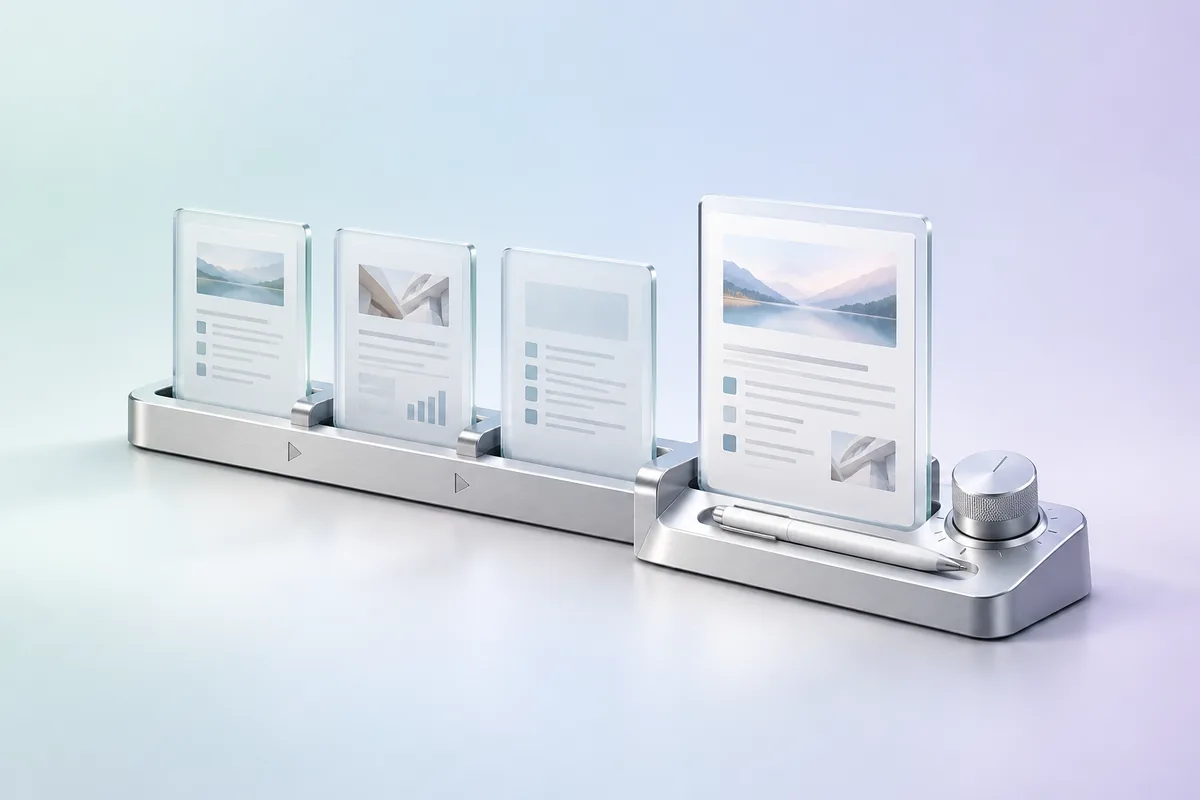
Preparing proposals
A first draft is assembled from your past proposals and templates, then the partner who will sign it reviews and completes it.
See the industry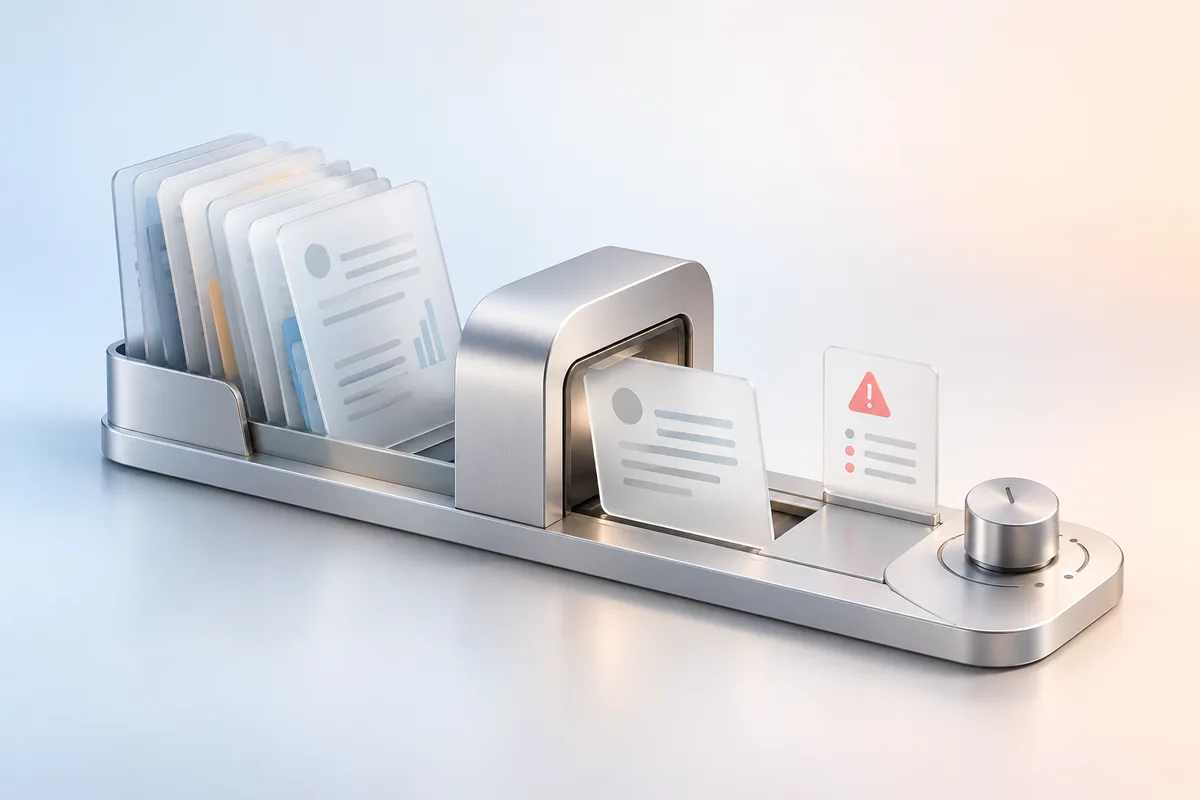
Summarising a client file
The case handler receives a note that summarises the documents in a file and flags what's missing, then checks it before deciding.
See the industry
Writing property listings
A property's data sheet becomes a listing written in French and in your buyers' languages, which the agent reviews before it's published.
See the industry
Writing product sheets
Catalogue specifications become product sheets in the brand's voice, reviewed before they go online, which saves writing them one by one.
See the industry
FAQ
Frequently asked questions
What is generative AI, and how does it go beyond ChatGPT?
ChatGPT is an interface where you chat with a language model. In a business, the same kind of model becomes useful when it works inside your process, from your sources and document templates, and its output is reviewed before it's used. The work is therefore mostly about that integration, with your tools as much as with your review rules.
Can AI write in French and Arabic in our brand's voice?
Today's models write in French, English and Arabic. Your brand's voice comes from output templates and from examples taken from your best documents, which we give the system each time it writes. For Arabic, we first test on your own texts, because quality varies with the register and your industry's vocabulary.
How much does a generative AI project cost in Morocco?
The investment depends on the uses chosen, the documents and sources to connect, the review process and the volume of content produced. Model usage comes on top, billed by the providers, either in your name or recharged at cost. So we set the amount after choosing the first uses with you.
How do you prevent inaccurate or inappropriate content?
The system writes from the sources you approve, and its instructions forbid it from inventing a fact or a figure that isn't in those sources. So it flags what it couldn't find rather than filling the gap. A person reviews each document before it leaves the team, and every version is kept, so an error can be traced back to its source.
Are our documents used to train the model?
We check each provider's terms, retention and training included, before choosing its model, and we present them to you with our recommendation. When your documents must not leave your company, the model can also run on your own infrastructure. Our AI Security & Governance page covers these choices.
Let's discuss your priorities
Let's find the documents AI can prepare for you.
Name three documents your teams write every week, and the person who reviews them. We'll work out together which ones suit a first draft, and with what review.
- The call lasts thirty minutes, by video.
- You speak directly with a Claro expert.
- Afterwards, we email you the next step we recommend.