
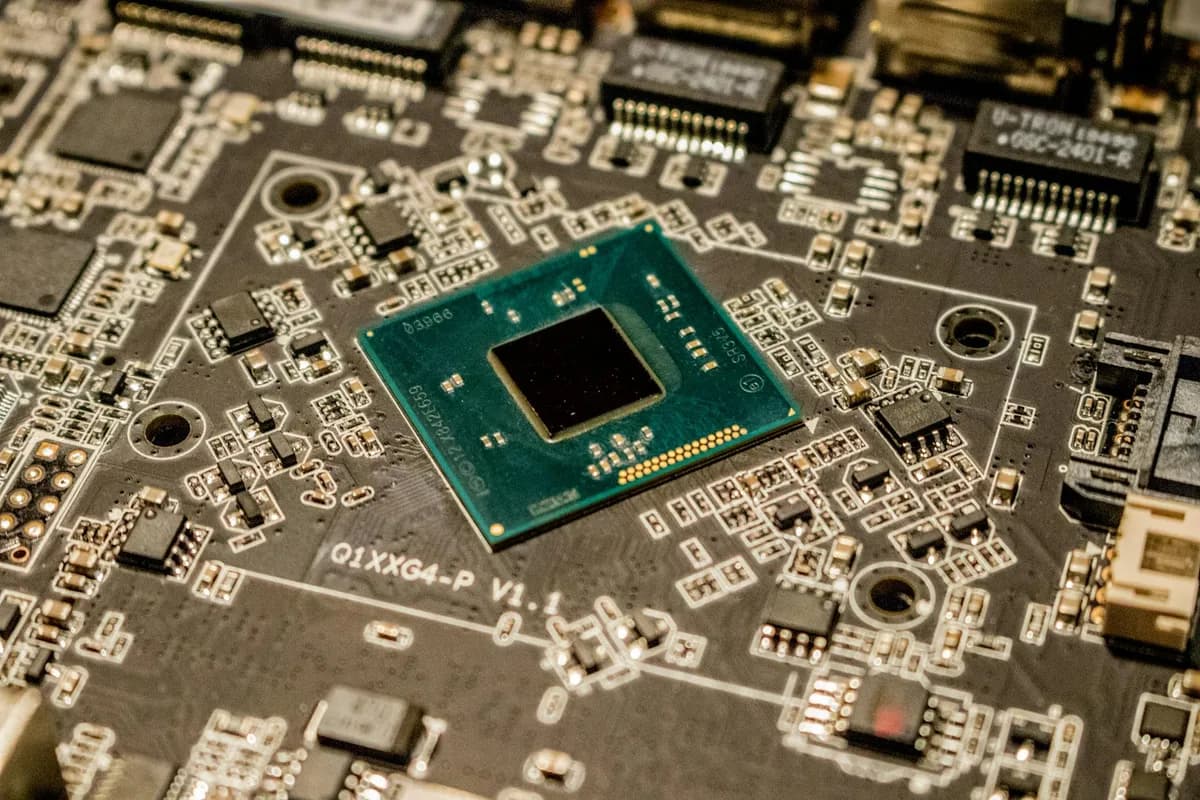
On May 29, 2026, South Korean startup XCENA closed a $135 million funding round at a $570 million valuation. Their thesis is provocative: AI's real bottleneck is not compute, it's memory.
This claim deserves scrutiny. Since 2020, the industry has focused on GPU acquisition. NVIDIA H100 wait times reached 18 months. Hyperscalers invested hundreds of billions in datacenters dedicated to matrix multiplication. Yet XCENA raised half a billion in valuation by arguing everyone is looking in the wrong direction.
The Memory Wall: A 30-Year-Old Problem
The "memory wall" is not a recent discovery. In 1995, researchers at MIT and DEC documented the growing gap between processor speed and memory bandwidth. For 30 years, system architects worked around this with hierarchical caches, branch prediction, and intelligent prefetching.
AI changes the equation. A 70-billion parameter language model weighs roughly 140 GB in FP16 precision. Each generated token requires reading the entire model weights. At 100 tokens per second, that's 14 TB/s of memory bandwidth required. The most powerful GPUs top out at 3-4 TB/s.
In our work with companies deploying language models internally, we regularly observe this pattern: the GPU runs at 40-50% utilization while HBM memory is saturated. Compute waits for data.
This observation, repeated across dozens of AI transformation engagements, points to a systemic problem. Teams buy compute power they only partially exploit. Money flows into premium GPUs while the real bottleneck lies elsewhere in the architecture.
The implications for capacity planning are significant. Organizations accustomed to thinking in TFLOPS need to add memory bandwidth to their vocabulary. A $50,000/month GPU cluster running at 45% utilization is not a high-performance system; it's an expensive mistake.
The XCENA Approach: Colocated Memory-Compute
XCENA develops chips that physically bring compute units and memory closer together. Instead of transferring data between a GPU chip and separate HBM modules, their architecture integrates compute and storage on the same substrate.
According to public data from their raise reported by TechCrunch, this approach promises:
- 60% reduction in memory access latency
- 3x improved energy efficiency per inference
- 40% lower cost per token at equivalent capacity
These are projections. The startup does not yet have a product in production. But investors, including several Korean and Japanese semiconductor-focused funds, appear convinced.
What This Means for Infrastructure Teams
If you manage AI infrastructure for a company, three implications merit attention:
1. Capacity Planning Metrics Shift
Historically, we size by TFLOPS (compute capacity). The relevant ratio becomes memory bandwidth per unit of compute. A cluster with less powerful GPUs but better HBM bandwidth can outperform a poorly optimized H100 cluster.
In practice: ask your cloud providers for memory bandwidth metrics per instance, not just GPU specs.
2. Serving Architectures Evolve
Classic tensor parallelism distributes the model across multiple GPUs to parallelize compute. Newer architectures favor pipeline parallelism and sequence parallelism that optimize memory access patterns.
Frameworks like vLLM and TensorRT-LLM already incorporate these optimizations. If you serve models with homegrown frameworks from 2023, you are probably paying 2x too much for infrastructure.
3. The Chip Market Diversifies
NVIDIA dominates with roughly 80% of the datacenter GPU market. But XCENA joins a growing list of challengers: Cerebras with its wafer-scale approach, Groq with its LPUs, AMD with MI300X, and now the Korean memory-first approach.
For a mid-market company ($10M-$250M ARR), this means more options in 18-24 months. The prudent strategy: avoid infrastructure commitments beyond 2 years, maintain abstraction in your serving code.
This architectural flexibility is precisely what we recommend during our AI maturity audits. The goal is not to pick the best hardware today but to build a stack capable of evolving with the market. Vendor lock-in in 2026 will look very expensive by 2028 when the alternatives mature.
The Economics of Inference in 2026
Let's look at concrete numbers. According to benchmarks published by Artificial Analysis, inference cost for GPT-4-class models ranges from $5 to $15 per million tokens depending on the provider.
For a company processing 10 million customer requests per month with 500-token responses on average:
- Monthly volume: 5 billion tokens
- Current cost: $25,000 to $75,000/month
- With 40% improvement (XCENA projection): $15,000 to $45,000/month
Potential annual savings: $120,000 to $360,000. For a company at $50M revenue, that's 0.2% to 0.7% margin recovered.
Limitations of the XCENA Thesis
Let's temper the enthusiasm. Several factors work against the startup:
Semiconductor Development Cycle
Designing, producing, and deploying a new chip architecture takes 3-5 years. XCENA will likely need to raise another $500M before having a competitive product at volume.
The CUDA Ecosystem
NVIDIA's moat is not just hardware. It's CUDA, cuDNN, TensorRT, and a decade of software optimizations. XCENA will need to either be CUDA-compatible (difficult with a radically different architecture) or build a complete software stack.
NVIDIA's Response
NVIDIA is working on HBM4 and "chiplet" architectures that partially address the memory wall. Their Blackwell and Rubin roadmap shows they are not blind to the problem.
Production Timeline Risk
XCENA's current timeline suggests commercial availability in 2028-2029. That's two to three years away. In the AI hardware market, two years is an eternity. The landscape could look completely different by then. Competitors may have shipped first. NVIDIA may have closed the gap. Customer needs may have evolved.
For companies making infrastructure decisions today, XCENA is worth tracking but not worth waiting for. The prudent approach is to make decisions based on what exists today while maintaining flexibility for what might emerge tomorrow.
Recommendations for Decision Makers
Here is what we advise CTOs and VPs of Engineering we work with:
Short Term (0-12 months)
- Audit your AI workloads to measure GPU utilization vs memory saturation ratio
- Adopt vLLM or TensorRT-LLM if you serve LLMs with legacy frameworks
- Negotiate cloud contracts with 12-month exit clauses
Medium Term (12-24 months)
- Follow independent benchmarks of new architectures (Groq, AMD MI300X, then XCENA when available)
- Maintain abstraction: your application code should not be coupled to specific hardware
- Budget a testing phase on alternative architectures
Long Term (24-36 months)
- Prepare a multi-vendor strategy for inference
- Consider direct partnerships with chip manufacturers if your volumes justify it
The Signal in the Noise
Beyond the XCENA case, this raise confirms a trend: the industry recognizes that the "more GPUs equals more performance" era is reaching its limits. The next improvements will come from architecture, not brute force.
For companies deploying AI in production, this is an invitation to think about infrastructure more sophisticatedly. Cost per token is not a given; it's an optimization variable.
Memory may not be the only bottleneck. But it's certainly a factor too many teams ignore when sizing their clusters. XCENA, whether it succeeds or not, will have at least put the topic on the table.
The challenge for companies today is not betting on the right future hardware. It's building architectures abstract enough to benefit from improvements regardless of their source. Teams that lock themselves into proprietary dependencies today will pay the price of inflexibility tomorrow.
The AI chip market will continue evolving rapidly. Each new architecture will promise revolutionary gains. Wisdom means staying informed, testing when relevant, but avoiding long-term commitments on unproven technologies. XCENA is an interesting hypothesis, not yet a purchase recommendation.
For executives evaluating infrastructure investments, the takeaway is nuanced. The memory bottleneck is real. The XCENA solution is promising but unproven. The correct response is not to wait, but to invest with flexibility built into every architectural decision.
To evaluate the memory efficiency of your current AI infrastructure, explore our AI audit offering or review our Hermes methodology for a structured approach to AI deployment.
Related Resources
Comparing providers? Check out our detailed comparison:
FAQ
Is memory really the main bottleneck for AI?
It depends on the workload. For inference on large language models (over 7B parameters), memory is often the limiting factor. For training smaller models or vision workloads, compute typically dominates. The best approach is to profile your specific workloads with tools like NVIDIA Nsight or PyTorch Profiler.
Should I wait for XCENA chips before investing in AI infrastructure?
No. XCENA likely will not have a commercial product before 2028-2029. Invest today with proven architectures, but keep your commitments flexible (12-month maximum cloud contracts, abstraction in code). Reevaluate when independent benchmarks of new architectures become available.
How do I measure if memory is my bottleneck?
Use nvidia-smi to monitor GPU utilization vs HBM memory bandwidth. If your GPU runs below 70% utilization while memory is saturated, you are memory-bound. Tools like PyTorch Profiler allow finer kernel-level analysis.
What alternatives to NVIDIA exist today for inference?
AMD MI300X offers higher HBM bandwidth than H100s. Groq promises ultra-low latencies for LLM inference. AWS Inferentia 2 and Google TPU v5 are cloud-native options. Each has tradeoffs; test on your specific workloads before committing.
Does XCENA represent a threat to NVIDIA?
In the short term, no. NVIDIA has 80% market share and an unmatched software ecosystem. In the long term, the colocated memory-compute approach could become standard. NVIDIA is already working on similar architectures. The likely scenario: NVIDIA adopts the best ideas and maintains dominance, or acquires the most promising challengers.