
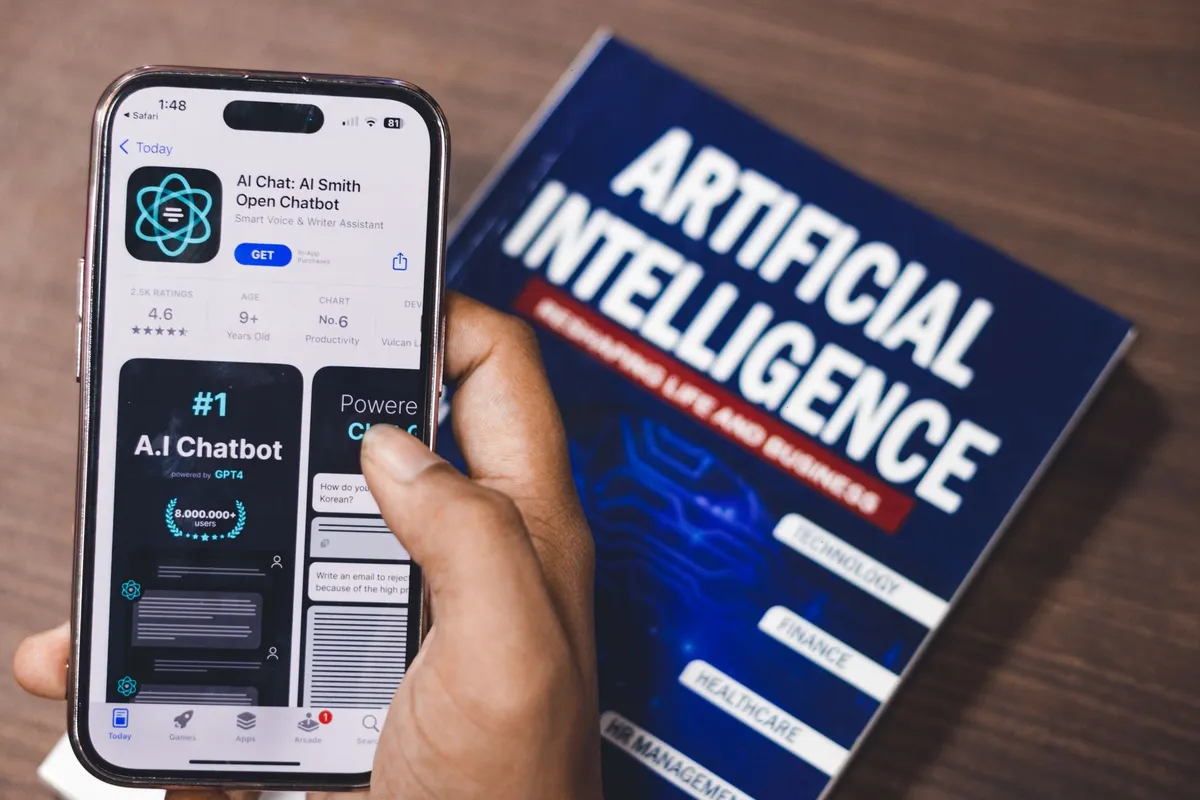
Nigeria just crossed a major milestone in public sector digitization. This week, the federal government launched an AI-powered chatbot, developed in partnership with Meta, to help citizens access government information and services. As one of the continent's most ambitious AI deployments in the public sector, this project offers valuable lessons for African businesses and governments, including Morocco.
What Just Happened
Nigeria's Federal Ministry of Communications, Innovation and Digital Economy has officially deployed an intelligent virtual assistant accessible via WhatsApp and a dedicated web portal. The tool allows Nigeria's 220 million citizens to ask questions about administrative procedures, required documents, processing times, and nearest service points.
According to ministry figures, the chatbot processed over 50,000 requests in its first 48 hours of operation. The most frequent inquiries concern passport renewal, business registration (CAC), and tax procedures (FIRS).
The Meta partnership brings proven technical infrastructure: Llama 3 language models serve as the system's foundation, while WhatsApp Business API integration enables massive distribution on Nigeria's most-used messaging platform (over 100 million active users).
Why This Matters for African Businesses
Conversational AI Is Becoming Standard
This deployment marks a turning point. When a government serving 220 million people adopts AI for citizen services, it normalizes the technology across the entire ecosystem. Businesses that haven't yet integrated AI chatbots into their customer strategy risk appearing outdated.
According to Gartner, 80% of customer interactions will occur without human intervention by 2027. In Nigeria, this figure could be reached earlier in the public sector thanks to this initiative.
WhatsApp as the Primary Channel
The choice of WhatsApp as the primary interface is strategic. In Sub-Saharan Africa, WhatsApp accounts for 93% of instant messaging traffic (Statista 2026). For Moroccan and African SMEs, this confirms that any AI chatbot should be deployed on WhatsApp first, even before a website or mobile app.
At Claro Digital, we've observed this trend across our AI automation projects: engagement rates on WhatsApp consistently exceed web chatbots by 3 to 5 times.
An Open-Source Model at the Core
The use of Llama 3 rather than a proprietary model like GPT-4 or Claude sends a strong signal. African governments can deploy sovereign AI solutions without total dependence on American hyperscalers. Inference costs are also reduced by 60-80% compared to commercial APIs.
Challenges Nigeria Will Face
Government Data Quality
A chatbot is only as good as the knowledge base feeding it. If administrative procedures aren't documented comprehensively and kept current, the chatbot will give incorrect or incomplete answers. Nigeria will need to invest heavily in structuring its administrative data.
Citizen Trust
Adoption of a government chatbot depends on trust. Citizens must be convinced their data is protected and that responses are reliable. A single viral error on social media could compromise the entire project.
Maintenance and Evolution
A chatbot isn't a one-time project. It requires a dedicated team to analyze conversations, identify gaps, update the knowledge base, and improve models. The government will need to budget for this maintenance long-term.
What This Means for Morocco
Morocco has considerable advantages for deploying similar initiatives. Internet penetration (88%) and WhatsApp usage (over 25 million users) create fertile ground. The "Digital Morocco 2030" strategy explicitly includes modernizing public services through AI.
Opportunities for Businesses
Moroccan SMEs can draw several lessons from this initiative:
-
Anticipate mass adoption: If governments deploy AI chatbots, citizens will expect the same service level from businesses.
-
Invest in WhatsApp Business API: It's the most relevant channel to reach customers in Morocco and francophone Africa.
-
Favor open-source models: For simple use cases (FAQ, guidance, appointment booking), models like Llama 3 or Mistral offer excellent cost-performance ratios.
For businesses looking to rapidly deploy an AI chatbot, our customer service chatbot solutions provide a proven framework from design to production.
Meta's Role in the African Ecosystem
The Nigeria-Meta partnership fits into a broader strategy from the Menlo Park firm. Since 2024, Meta has invested over $500 million in African digital infrastructure, including the 2Africa submarine cable and regional data centers.
For Meta, Africa represents the last major growth market. With 1.4 billion inhabitants and a young population (median age 19), the continent offers user potential that saturated European and American markets can no longer provide.
This dynamic creates opportunities for local businesses that can integrate into this ecosystem. Meta's technology partners in Africa benefit from privileged access to tools, training, and funding.
How to Deploy an AI Chatbot in Your Business
If Nigeria's example inspires you, here are the key steps to launch your own virtual assistant:
1. Define the Scope
Start with simple, high-volume use cases: product FAQ, order tracking, appointment booking. Don't try to automate everything on day one.
2. Structure Your Knowledge Base
The chatbot will respond from the documents you provide. Invest time in writing clear, complete, and current content sheets. A quality knowledge base accounts for 80% of success.
3. Choose the Right Model
For a simple chatbot, an open-source model fine-tuned on your data is sufficient. For complex conversations requiring reasoning, a commercial model (GPT-4, Claude) will be more suitable.
4. Integrate WhatsApp from the Start
Don't build a web chatbot first to "later" adapt it for WhatsApp. Design for WhatsApp from day one: short messages, quick reply buttons, limited multimedia.
5. Plan for Human Escalation
No chatbot can handle everything. Define clear criteria for transfer to a human agent: low confidence threshold, explicit request, sensitive subject.
Technical Aspects of the Nigerian Project
Nigeria's architecture choice deserves deeper analysis for technical teams looking to implement similar solutions.
Multi-Channel Infrastructure
The system relies on a distributed architecture with multiple entry points. WhatsApp Business API serves as the primary channel, but the web portal offers an alternative for users without smartphones or with unstable connections. This redundancy is essential in the African context where connectivity quality varies considerably.
The API Gateway centralizes requests from different channels before routing them to the natural language processing engine. This abstraction layer allows adding new channels (Telegram, SMS, native mobile apps) without modifying the core system.
Conversational Context Management
A major challenge for government chatbots is managing long and complex conversations. A citizen might start with a question about passport renewal, branch to associated fees, then ask about opening hours of the nearest office.
The Nigerian system uses a 30-minute session memory with previous context backup. If a user returns after several hours, the chatbot can resume where it left off, reducing frustration and improving user experience.
Legacy System Integration
African administrations often run on IT systems inherited from the 1990s and 2000s. The Nigerian project had to create adapters to interface the modern chatbot with existing databases from civil registry, tax, and immigration systems.
This progressive integration is a model that SMEs can follow: start by connecting the chatbot to your most robust systems (CRM, customer database), then gradually extend to secondary systems.
Success Metrics and Key Indicators
How do you know if your AI chatbot is working? Nigeria defined several KPIs that any business can adapt.
First Contact Resolution Rate
The percentage of requests resolved without escalation to a human agent. The initial target for the Nigerian project was 65%. After 48 hours, the observed rate was 72%, exceeding expectations.
Average Resolution Time
The duration between the first question and the final satisfactory answer. For simple questions (hours, required documents), the target time is under 30 seconds. For complex questions (case status, complaints), acceptable time rises to 3 minutes.
User Satisfaction Score
Measured via post-interaction surveys on a 1-5 scale. A score above 4.2 is considered excellent in the public services sector. The Nigerian project opted for an optional 2-question survey at the end of each significant interaction.
Abandonment Rate
The percentage of users who leave the conversation before getting an answer. A rate above 25% signals a comprehension or response relevance problem.
The Future of Government AI in Africa
Nigeria isn't an isolated case. Kenya, Rwanda, and Ghana have all announced similar projects for 2026-2027. The African Union is working on a continental regulatory framework for AI in public services.
This wave of government adoption will accelerate market maturity. Local providers who can support this transformation with solutions adapted to African realities (intermittent connectivity, multilingualism, low digital literacy) will capture a significant share of this growing market.
The Nigerian project also demonstrates that sovereign solutions are viable. By choosing Llama 3 rather than a proprietary API, the government retains control over its data and operational costs. This precedent could influence other African countries to follow a similar path.
For Moroccan entrepreneurs and executives, the message is clear: conversational AI is no longer an experimental option. It's an emerging standard, driven by governments themselves.
FAQ
What does it cost to deploy an AI chatbot like Nigeria's?
For an SME, a WhatsApp chatbot based on open-source models costs between $3,000 and $8,000 in initial development, plus $300-800 per month in infrastructure and maintenance. Large-scale government projects typically exceed $5 million.
Are open-source models like Llama 3 really reliable for professional use?
Yes, for structured use cases (FAQ, guidance, forms). Benchmarks show Llama 3 70B achieves 85% of GPT-4's performance on simple conversational tasks, at 5-10x lower inference cost. For complex tasks requiring advanced reasoning, commercial models remain superior.
How do you ensure data privacy with an AI chatbot?
Three complementary approaches: local model hosting (no sending data to external APIs), end-to-end encryption of conversations, and log anonymization. GDPR compliance or its local equivalent should be built in from the design phase.
How long does it take to deploy a functional chatbot?
A functional MVP can launch in 4-6 weeks. The critical phase isn't technical development but building the knowledge base. Plan for 2-3 additional months for iteration based on user feedback.
Can a chatbot completely replace a human customer service team?
No. The best chatbots handle 60-80% of simple requests, allowing human agents to focus on complex cases. The goal isn't replacement but increasing processing capacity and reducing wait times.