
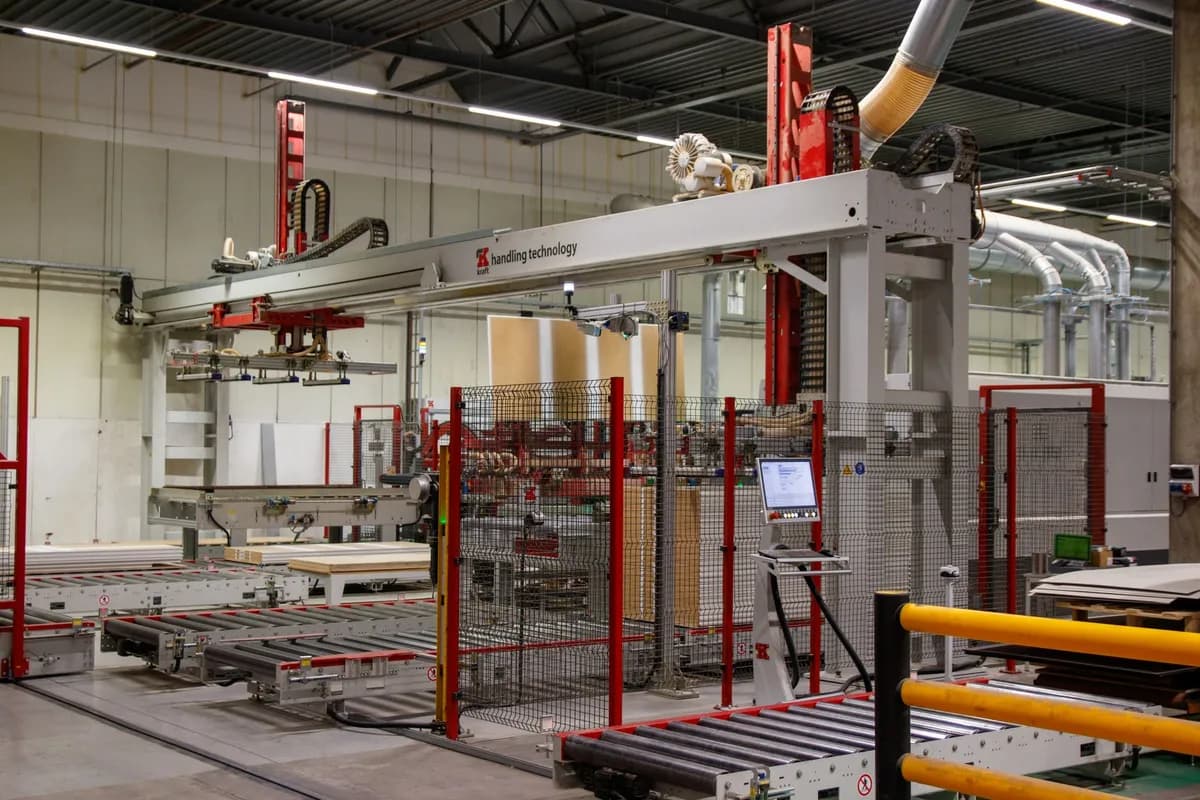
Amazon just crossed a major threshold in warehouse automation. The new generation of Proteus, its fully autonomous warehouse robot, can now interact with human operators using natural language. No more code or complex interfaces: you speak to it, it executes.
This evolution is not trivial. It marks the shift from programmed automation to conversational automation, a transformation that will redefine global logistics standards.
What Amazon Just Announced
On June 4, 2026, Amazon unveiled the new version of Proteus at a press event in Seattle. The specifications are impressive:
- Natural language understanding: Proteus can receive verbal instructions in English and Spanish, with more languages planned for Q4 2026
- Contextual learning: the robot adapts to each warehouse's specific procedures
- Improved autonomous navigation: 360-degree obstacle detection with reaction time under 50 milliseconds
- Load capacity: up to 500 kg, which is 40% more than the previous generation
According to Amazon's internal data, the pilot deployment across three American warehouses resulted in a 35% productivity increase while reducing handling incidents by 62%.
Why Natural Language Changes Everything
Traditional robot programming for logistics requires specialized technical skills. An operator who wants to modify a route or procedure must go through a programming interface, often with help from a specialized technician.
With Proteus's conversational interface, that barrier disappears. A team leader can say: "Prioritize Prime orders in aisle 7 for the next two hours" and the robot understands, confirms, and executes.
Implications for SMEs
This democratization of robotics has direct consequences for Moroccan and African businesses managing warehouses:
1. Reduced training costs Training an operator to use a conversational robot takes a few hours, compared to several weeks for traditional systems. According to a 2025 McKinsey Global Institute study, training costs for conversational interfaces average 70% lower than programmatic interfaces.
2. Increased operational flexibility SMEs managing significant seasonal variations can adjust their processes in real-time without calling external integrators.
3. Accessibility for emerging markets Morocco, with its position as a logistics hub between Europe and Africa, could particularly benefit from this technology. Companies in the Tangier free zone handle growing volumes that justify automation investment.
The Business Model Behind Proteus
Amazon does not sell Proteus directly. The model is Robot-as-a-Service (RaaS), an approach that transforms capital expenditure into predictable operational costs.
Pricing announced for the American market:
| Plan | Monthly Price | Included |
|---|---|---|
| Starter | $2,500 USD | 1 robot, standard support |
| Business | $8,000 USD | 3 robots, priority support, analytics |
| Enterprise | Custom quote | Unlimited fleet, API integration, guaranteed SLA |
These prices may seem high, but they become relevant when compared to the cost of a full-time logistics operator. In the United States, the median salary for an order picker is $3,200 USD per month according to the Bureau of Labor Statistics (2025). A robot that works 24 hours a day without breaks or sick leave radically changes the equation.
Current Limitations
Proteus is not a miracle solution. Several constraints deserve attention:
Required infrastructure The robot requires WiFi 6 or higher network with latency under 20ms. Older warehouses with complex metal structures may have connectivity issues.
Structured environment Proteus works best in predictable environments. A warehouse with standardized aisles and appropriate floor marking will deliver better results than an improvised storage facility.
Integration with existing WMS Proteus's API is compatible with major Warehouse Management Systems (SAP, Oracle, Manhattan Associates), but integration with custom solutions may require specific development.
What This Means for African Markets
Morocco positions itself as a major logistics hub. According to the Moroccan Logistics Development Agency, the sector represents 5.1% of national GDP and employs over 300,000 people.
The arrival of conversational robots like Proteus will accelerate three trends:
1. Operator Upskilling
Logistics jobs will evolve toward supervision and coordination roles. The operator who physically handled packages becomes the manager supervising a robot fleet. This transformation requires adapted training programs, an area where AI training services become strategic.
2. Warehouse Restructuring
New logistics investments will integrate the specifications required by autonomous robots from the design phase. Existing buildings will need to be retrofitted or risk losing competitiveness.
3. Cost Pressure
Companies that do not automate will see their margins compress against competitors benefiting from superior productivity. This is particularly true in cross-border e-commerce where preparation times and costs are decisive factors.
How to Prepare
If you manage a logistics operation in Morocco or Africa, here are the steps to consider:
Digital maturity audit Before considering robotization, assess your current infrastructure. A digital audit identifies missing prerequisites.
Realistic cost-benefit analysis Do not be seduced by marketing figures. Model the ROI with your own data: order volume, local labor costs, complexity of handled products.
Small-scale pilot Start with a limited area of your warehouse. Costly mistakes happen with premature massive deployments.
Team training Involve your operators from the project's start. Change resistance kills more automation projects than technical problems.
The Strategic Perspective
Amazon uses Proteus as a competitive advantage in its own logistics. But by offering it as RaaS, the company plays another game: becoming the invisible infrastructure of global commerce.
If your competitors adopt this technology and you do not, the productivity gap will widen quickly. By 2028, Gartner analysts predict that 65% of major global logistics operations will use some form of conversational robotics.
For Moroccan businesses, the time to evaluate these options is now. Not to blindly adopt the latest technology, but to understand how it can integrate into a broader transformation strategy.
AI automation solutions are not reserved for giants. They become accessible to SMEs that know how to deploy them intelligently.
Comparing Market Alternatives
Proteus is not the only player in the conversational logistics robotics market. Here is how it positions against available alternatives.
Locus Robotics
Locus has offered autonomous mobile robots (AMRs) since 2014. Their latest generation also integrates conversational capabilities, but limited to predefined commands. The pricing model is similar to Amazon's RaaS, with prices starting around $2,000 USD per month. Locus excels in medium-sized e-commerce picking warehouses.
Geek Plus
This Chinese manufacturer dominates the Asian market with over 30,000 deployed robots. Their platform recently integrated natural language processing modules in Mandarin and English. Prices are generally 20 to 30% lower than Western competitors, making them attractive for budget-conscious operations.
6 River Systems (Shopify)
Acquired by Shopify in 2019, 6 River Systems offers Chuck, a collaborative robot oriented toward e-commerce warehouses. Native integration with the Shopify ecosystem is a major advantage for merchants using this platform. Conversational capabilities are still in development.
Proteus Differentiating Advantage
What distinguishes Proteus is the integration with the AWS ecosystem and Amazon's language models. The robot benefits from the same AI advances powering Alexa, offering superior contextual understanding compared to competitors.
Adoption Challenges in Africa
Adopting logistics robots in Africa presents specificities that companies must anticipate for successful deployment.
Electrical Infrastructure
Warehouses must have stable electrical supply. Frequent outages in certain regions require UPS systems and backup generators capable of powering robot charging stations.
Connectivity
Cloud dependency for certain advanced features requires reliable internet connection. Hybrid solutions, with local processing for common commands and cloud for complex cases, offer a pragmatic compromise.
Local Skills
Robot maintenance and supervision require trained technicians. Morocco, with its engineering schools and proximity to Europe, has an adapted talent pool. Other African markets will need to invest more in training.
Regulatory Framework
Legislation on autonomous robots in professional environments remains unclear in most African countries. Pioneering companies often operate in a legal vacuum that could fill with more restrictive regulations.
The regulatory landscape is evolving quickly. Companies that start engaging with regulators now will help shape frameworks that work for everyone. Waiting until regulations are finalized risks facing rules designed without industry input.
Related Resources
Comparing providers? Check out our detailed comparison:
FAQ
Is Amazon Proteus available in Morocco?
Not officially yet. Amazon announced an initial deployment in the United States and Western Europe for 2026, with expansion to the MENA region planned for 2027. Moroccan businesses interested can however start preparing their infrastructure and evaluating local alternatives.
What is the minimum investment to automate a warehouse?
Proteus's RaaS model starts at $2,500 USD per month for one robot. But the total investment includes infrastructure adaptation (WiFi, floor marking, WMS integration) which can represent between $5,000 and $20,000 USD depending on the warehouse's size and current state.
Will robots replace logistics jobs in Morocco?
They will transform them. Repetitive handling positions will decrease, but supervision, maintenance, and coordination roles will increase. International experience shows that automated warehouses often create as many jobs as they eliminate, but with different profiles.
How do I assess if my warehouse is ready for robotization?
Three key criteria: stable WiFi coverage throughout the space, WMS system capable of communicating via API, and sufficient order volume to justify the investment. A digital maturity audit allows objective evaluation of these elements.
What is the difference between Proteus and traditional AGVs?
Automated Guided Vehicles (AGVs) follow predetermined paths and require programming for each modification. Proteus uses artificial intelligence to navigate autonomously and understands natural language instructions, making it much more flexible and easier to manage daily.