
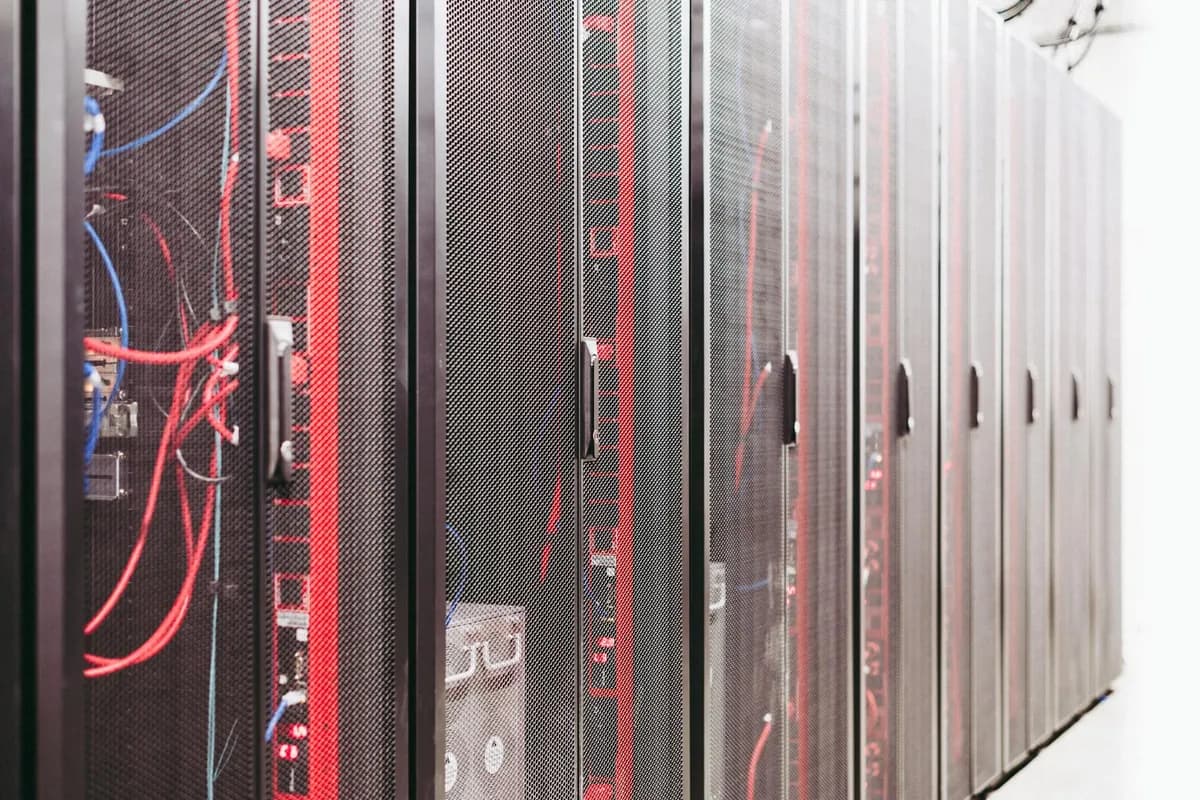
Meta just signed its first AI data center deal in India, partnering with Reliance on a 168-megawatt facility that will support Meta's global AI computing needs and can be expanded over time. On the surface, this is one more line in the endless stream of AI infrastructure announcements. Look closer and it marks something more interesting: hyperscalers are no longer building their AI backbone exclusively in the United States and Europe. They are planting compute in emerging markets, close to talent, available energy, and growing user bases.
If you run a business in Morocco or anywhere in Africa, this deal deserves your attention. It redraws the global map of AI compute, and it raises a pointed question: when does this wave reach Africa, and how do you position your company before it does?
What actually happened
Meta struck a partnership with Reliance, the Indian conglomerate led by Mukesh Ambani, to host part of its AI compute capacity on Indian soil. The 168 MW site will serve Meta's global AI workloads, not just Indian traffic. That detail matters: India is not acting as a regional cache here. It is becoming a structural node in the worldwide infrastructure of an American tech giant.
Three things make this deal worth dissecting:
- It is Meta's first AI data center in India. The company has poured enormous capital into AI infrastructure over the past two years, but its flagship campuses were concentrated in the US. Outsourcing a compute building block to a local Indian partner is a strategic inflection, not a routine expansion.
- Meta chose a local partner over building alone. Reliance brings land, power, and regulatory footing. Meta brings demand and technology. This co-investment template is exactly what African economies could offer, if they prepare for it.
- The capacity is designed to grow. 168 MW is a starting point. For context, the International Energy Agency projects that global data center electricity consumption could roughly double by 2030, with AI as the primary driver. Sites announced today are engineered as seeds, not ceilings.
Why India, and why now?
Meta's logic is straightforward once you look at the fundamentals. India combines a massive engineering talent pool, one of the largest user bases for Meta's products anywhere, a government that has pushed hard on digital sovereignty, and industrial partners able to mobilize gigawatts of power. Reliance, through Jio, has already proven it can roll out telecom infrastructure at a scale and speed few companies in the world can match.
There is also a regulatory chess move embedded in this. Indian regulators have spent years pressing for citizen data to be processed locally. Rather than treating data localization as a tax, Meta is converting it into an asset: a local data center satisfies localization requirements while adding global capacity.
Finally, the economics of AI compute are shifting. Foundation models have multiplied, and demand is moving from training toward inference, the day-to-day execution of models across billions of requests. Inference rewards proximity: lower latency, lower bandwidth costs, simpler compliance. That is precisely the role facilities like this one will play.
The uncomfortable contrast for Africa
Here is the number that should bother every African policymaker and founder: industry estimates put Africa at less than 1 percent of global data center capacity, while the continent holds close to 18 percent of the world's population. Africa overwhelmingly consumes AI produced elsewhere, with all the latency, transit costs, and regulatory dependency that implies.
The Meta-Reliance deal demonstrates that another path exists. Hyperscalers will co-invest with credible local partners when three conditions line up: abundant and competitive energy, a stable regulatory framework, and either a large market or a strategic geographic position.
Morocco checks several of these boxes:
- Renewable energy. The kingdom targets more than 52 percent renewable electricity capacity by 2030, with some of the most cost-competitive solar and wind complexes in the region. Green power has become a primary site-selection criterion for AI data centers, whose carbon footprint is under intense scrutiny.
- Geography. Fourteen kilometers from Europe and connected by multiple submarine cables, Morocco can serve inference workloads for Southern Europe and West Africa with excellent latency.
- Digital Morocco 2030. The state has made digital infrastructure and AI an explicit national priority, with public investment in cloud capacity and skills. Data centers already operate in Casablanca, Rabat, and Benguerir, and official strategy openly aims at regional data-hub status.
The window is real, but it will not stay open forever. India, Brazil, Indonesia, and the Gulf states are capturing most announcements today. Every quarter without a flagship project is regional market share decided somewhere else.
What this means for your business right now
You are not Meta and you are not Reliance. This deal still has concrete consequences for an SME or mid-size company operating in Africa or nearshoring from Europe.
1. Inference costs will keep falling. As global capacity grows, price per request drops. AI use cases that were not viable eighteen months ago (automated document triage, internal assistants, customer email analysis) are crossing into profitability. It is the right moment to revisit an enterprise AI strategy that may have been shelved on cost grounds.
2. Server proximity is becoming a sales argument. If you operate in regulated sectors such as banking, insurance, or healthcare, data residency constrains your vendor choices. Regional AI capacity arriving over the next few years will widen your compliance options. Get ahead of it by mapping today which of your data can leave the country and which cannot.
3. Local skills are appreciating assets. Every data center built in an emerging market pulls an ecosystem along with it: integrators, operators, MLOps engineers. Companies that train their teams now will hold a durable advantage. Structured AI training for your staff costs a fraction of what hiring experienced profiles will cost in three years.
4. Generative AI is exiting the experimentation phase. When Meta commits tens of billions of dollars per year to infrastructure, the message to executives is unambiguous: this technology is becoming a base layer of the economy, the way electricity and cloud did before it. Businesses that structure their generative AI projects now are building a lead that latecomers will struggle to close.
A practical action plan for this week
None of this requires hyperscaler budgets. Four moves you can make immediately:
- Audit your current AI dependency. List the AI services your company already consumes, often more than you think across CRM, marketing, and support tools. Identify where the data is hosted and what your contracts actually say about it.
- Pick two high-volume inference use cases. Document triage, customer request classification, and support reply drafting are typical candidates. These are the workloads that benefit most directly from falling compute prices.
- Ask your vendors about regional roadmaps. Your cloud and SaaS providers know their data residency plans. Their answers tell you whether your compliance constraints dissolve in twelve months or persist.
- Budget for skills, even modestly. A small recurring AI training budget changes internal culture more reliably than one large flagship project that arrives late.
The signal beneath the announcement
One last reading of this deal is worth keeping in mind. Hyperscaler infrastructure decisions are leading indicators: they reveal where these companies expect demand, talent, and regulatory stability to be five years from now. When Meta anchors compute in India through a local partner, it is pricing in a future where AI consumption in emerging markets justifies local capacity. African markets are on the same demand curve, just a few years behind, and the countries that prepare partnerships, energy capacity, and clear rules today will be the ones receiving these calls tomorrow. For business leaders, the practical takeaway is symmetrical: the infrastructure is coming toward you, so the scarce resource is no longer compute access but organizational readiness to use it well.
FAQ
Why does a Meta deal in India matter to African companies?
Because it proves hyperscalers are now willing to co-invest in AI infrastructure outside Western markets, through local partners. The template tested in India (local industrial partner, available energy, clear regulation) is transferable to Africa, and Morocco is a credible candidate thanks to renewable energy targets above 52 percent by 2030 and direct connectivity to Europe.
How big is a 168 MW AI data center?
Mid-sized by hyperscaler standards but very large for an emerging market: 168 megawatts exceeds the total installed data center capacity of many African countries. The largest AI campuses announced in the US target multiple gigawatts, ten to thirty times more, which underlines that this Indian site is designed as an expandable first step.
Should we wait for local data centers before starting AI projects?
No. The vast majority of business use cases (internal assistants, document automation, customer analytics) work well today through existing cloud APIs. Regional capacity will improve latency, cost, and compliance, but waiting simply hands the learning-curve advantage to competitors who start now.
Does data localization apply to companies in Morocco?
Increasingly, yes. Morocco's data protection law (Law 09-08) and sector regulators impose conditions on personal data transfers, and regulated industries face stricter residency expectations. Mapping your data flows now prepares you both for compliance and for the arrival of regional hosting options.
What is the first step for an SME that wants to ride this trend?
Run a focused audit to identify two or three high-volume, low-risk AI use cases, then launch one measurable pilot. That is exactly what a structured AI strategy engagement delivers in a few weeks, with no infrastructure investment required.