
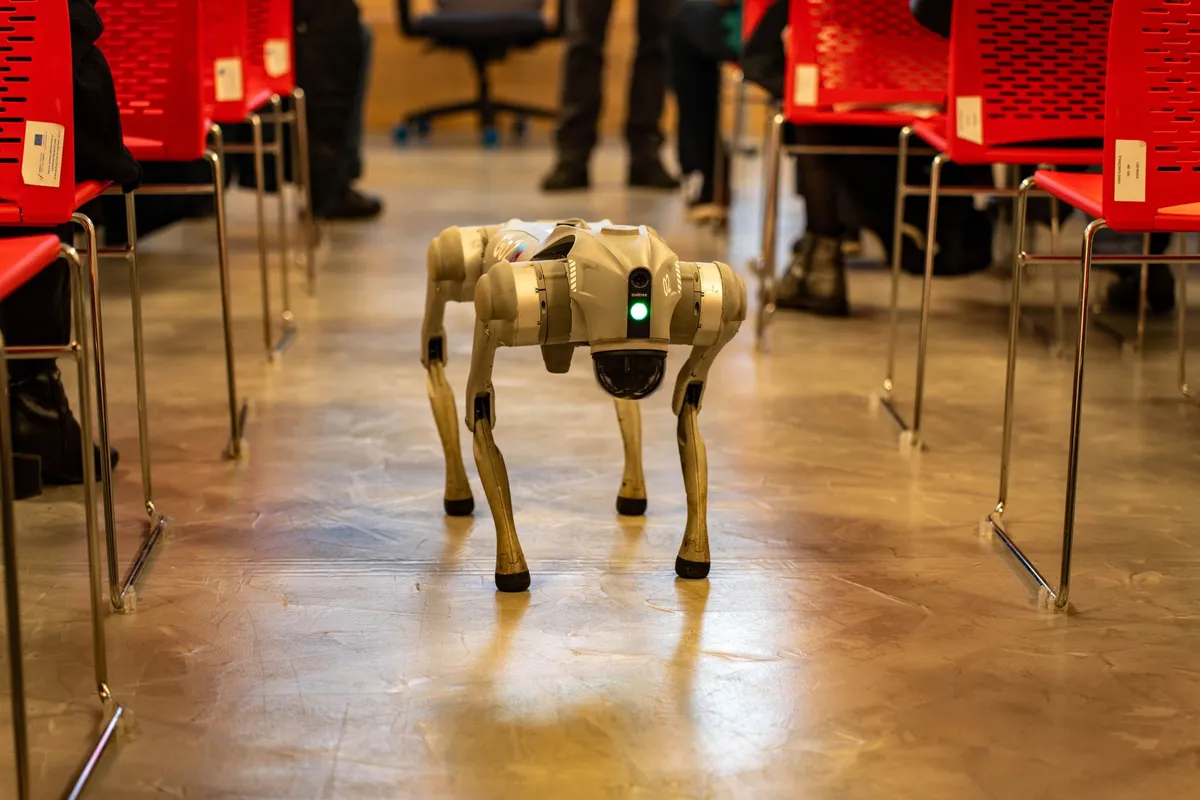
The news broke this week: Hyundai Motor Group now owns 100% of Boston Dynamics after SoftBank's exit for $325 million. This strategic move reshapes the industrial robotics landscape. For entrepreneurs in Morocco and across Africa, this consolidation opens new automation possibilities worth understanding and preparing for.
What Just Happened
SoftBank, the Japanese conglomerate known for massive tech investments, has sold its stake in Boston Dynamics to Hyundai. The South Korean automaker becomes the sole owner of the advanced robotics pioneer.
This transaction values Boston Dynamics well below the $1.1 billion SoftBank paid when acquiring it from Google in 2017. The valuation gap reflects the challenges of monetizing cutting-edge technology in a demanding B2B market.
For Hyundai, the objective is clear: integrate Boston Dynamics' locomotion and manipulation capabilities into its "future mobility" vision. The Korean group is investing heavily in autonomous vehicles, service robots, and logistics automation.
Boston Dynamics is globally recognized for robots like Spot (the quadruped capable of navigating difficult terrain), Atlas (the acrobatic humanoid), and Stretch (the warehouse logistics robot). These machines represent the state of the art in robotic mobility and object manipulation.
The acquisition signals a shift from pure R&D to commercial deployment. Hyundai brings manufacturing scale and distribution networks that Boston Dynamics lacked under SoftBank's financial ownership.
Why This Acquisition Matters for Your Business
Industrial Robot Accessibility Will Accelerate
Hyundai has the manufacturing infrastructure to produce robots at scale. Unlike SoftBank, which remained a financial investor, Hyundai can vertically integrate production. Goldman Sachs analysts estimate production costs could drop 30-40% by 2028 through this integration.
For a Moroccan SME, this means logistics robots like Spot or Stretch could become accessible within 3-5 years. Today, a Spot robot costs approximately $75,000. Significant price reductions would open the market to mid-sized businesses.
The Moroccan industrial ecosystem, particularly dynamic in automotive and aerospace, could benefit quickly from these pricing evolutions. Free zones like Tanger Med and the Atlantic Free Zone constitute ideal testing grounds for these new technologies.
Mobile Robotics Enters Automotive Manufacturing
Hyundai isn't hiding its intentions: deploying Boston Dynamics robots in its own factories before commercializing them. Targeted applications include quality inspection, parts handling, and industrial site security.
This "dogfooding" strategy validates the technology under real conditions. Feedback from Hyundai plants in Korea, the United States, and Europe will serve as reference for future industrial clients.
The manufacturer plans to equip its production lines with Spot robots for automated vehicle inspection at the end of the assembly line. This approach could reduce inspection times by 40% while increasing defect detection rates.
North Africa Becomes a Strategic Territory
Morocco already hosts a Hyundai plant in Kenitra since 2022. With this acquisition, the Korean group could test robotic solutions within its regional ecosystem. Industrial free zones represent controlled environments perfect for pilot phases.
According to the Moroccan Investment Development Agency (AMDI), the automotive sector employs over 220,000 people in Morocco. The gradual introduction of advanced robotics will transform the skills required in the job market.
Partnerships between Hyundai and local equipment suppliers could accelerate robotics skills transfer. Moroccan companies positioned on maintenance and automated systems integration will benefit from a considerable competitive advantage.
Concrete Implications for Entrepreneurs
Opportunity 1: Maintenance and Integration Services
Boston Dynamics robots require specialized maintenance expertise. Local companies able to train technicians and provide technical support will have a competitive advantage. Demand for AI transformation and integration services will grow with robot adoption.
The robotics maintenance market in Africa should reach $450 million by 2030, according to McKinsey. Early entrants in this segment will capture a significant share of this value.
Opportunity 2: Vertical Application Development
Spot, Boston Dynamics' quadruped robot, functions as an open platform. Developers can create sector-specific applications for industries like mining, energy, or construction. In Morocco, the phosphate sector (OCP Group) could benefit from inspection robots for extraction sites.
Spot's open APIs allow integration of specialized sensors: thermal cameras, gas detectors, spectrometric analyzers. This modularity opens infinite possibilities for creative local integrators.
Opportunity 3: Training and Professional Reskilling
Automation creates demand for new skills: robot programming, predictive maintenance, autonomous fleet supervision. Vocational training centers that anticipate these needs will capture a share of the reskilling market.
Training organizations could develop dedicated industrial robotics tracks in partnership with manufacturers like Hyundai. This type of initiative already exists for traditional automotive and could extend to emerging technologies.
What You Should Do Now
Step 1: Assess Your Operational Maturity
Before considering robotic automation, ensure your processes are documented and standardized. A robot amplifies the efficiency of good practices, but also existing inefficiencies. Conduct an audit of your logistics and manufacturing operations.
Identify processes that generate the most added value and those consuming the most human resources on repetitive tasks. This mapping will serve as a basis for prioritizing automation candidates.
Step 2: Identify High-Volume Repetitive Tasks
Robots excel at repetitive, dangerous, or ergonomically challenging tasks. List the workstations matching these criteria in your company. Calculate the total cost of these operations (salaries, sick leave, turnover) to build a solid business case.
Key indicators to track: workplace accident rate, absenteeism on targeted positions, employee replacement cost, new hire training time.
Step 3: Build a Technology Watch
Follow Hyundai and Boston Dynamics announcements about new products and pilot programs. Subscribe to industry newsletters and attend trade shows like GITEX Africa or relevant manufacturing exhibitions in your region.
Join professional communities on LinkedIn discussing industrial robotics in Africa. Peer experience sharing accelerates collective learning.
Step 4: Explore Available Funding
Morocco's Digital 2030 program includes technology investment support mechanisms. Banks like Attijariwafa offer credit lines for industrial equipment. Prepare a solid investment file to negotiate the best terms.
The EBRD and IFC also finance industrial innovation projects in Morocco. These institutions offer advantageous conditions for companies demonstrating positive impact on employment and competitiveness.
The Broader Context of Global Robotics
This acquisition fits into a sector consolidation trend. Automotive and tech giants are positioning themselves in robotics:
- Tesla is developing its Optimus humanoid robot for factory automation
- Amazon acquired Kiva Systems and deploys over 750,000 robots in its warehouses
- Nvidia supplies the AI chips powering most modern autonomous robots
The global service robotics market should reach $103 billion by 2028, according to the International Federation of Robotics. Africa represents less than 2% of this market but shows the highest growth rates.
The automation race is intensifying across all sectors. Companies that delay exploring these technologies risk losing competitiveness against more agile competitors.
Challenges to Anticipate
Total Cost of Ownership
A robot's purchase price represents only a fraction of the total cost. Add operator training, maintenance, software updates, and infrastructure (charging stations, communication networks). Plan an additional budget of 50-100% of the purchase price for the first year.
Integration with Existing Systems
Modern robots communicate via APIs and standard protocols. Check compatibility with your ERP, WMS (Warehouse Management System), and quality control systems. Systems integration solutions enable connecting these new equipment to your existing infrastructure.
Managing Human Change
Robot introduction raises legitimate concerns among employees. Communicate clearly about objectives (improving working conditions, not replacing humans). Involve teams in defining use cases and training programs.
Outlook for 2027 and Beyond
Hyundai announced an $8 billion investment plan in robotics and AI through 2030. The first "Made by Hyundai" robots should appear on the market by 2027, with more competitive prices than current models.
For African businesses, the opportunity window opens now. Those who start exploring automation today will be better positioned to adopt next-generation robots when they become economically viable.
The convergence of AI capabilities with physical robotics creates unprecedented possibilities. Companies that build robotics expertise now will lead their industries in the coming decade. Early movers in the African robotics space will benefit from first-mover advantages as the market matures and Hyundai expands its distribution network across emerging markets.
FAQ
When will Boston Dynamics robots be available in Morocco?
Boston Dynamics already sells Spot and Stretch internationally through authorized distributors. However, adoption remains limited to large enterprises due to costs. With Hyundai integration, broader distribution channels should develop by 2027-2028, potentially through the Hyundai automotive network.
How much does a Spot robot cost today?
The Spot robot sells starting at $74,500 for the base model. Options (robotic arm, thermal cameras, specialized software) can double this price. Annual maintenance costs represent approximately 10-15% of the purchase price.
Will robots replace employees in Moroccan factories?
Automation transforms jobs more than it eliminates them. Repetitive and dangerous tasks will be progressively robotized, but new positions emerge: robotics maintenance technicians, fleet supervisors, application developers. The challenge is training the workforce in tomorrow's skills.
How can I prepare my business for the robotics era?
Start by auditing your current processes and identifying automation candidate tasks. Train your technical team in robotics and programming basics. Establish partnerships with local integrators and follow government support programs like Morocco Digital 2030.
Which African sectors will benefit most from Boston Dynamics robotics?
Extractive industries (mining, phosphates), logistics (ports, warehouses), energy (plant and network inspection), and precision agriculture are the most promising candidates. Spot's ability to navigate difficult terrain makes it particularly suited to African environments.