
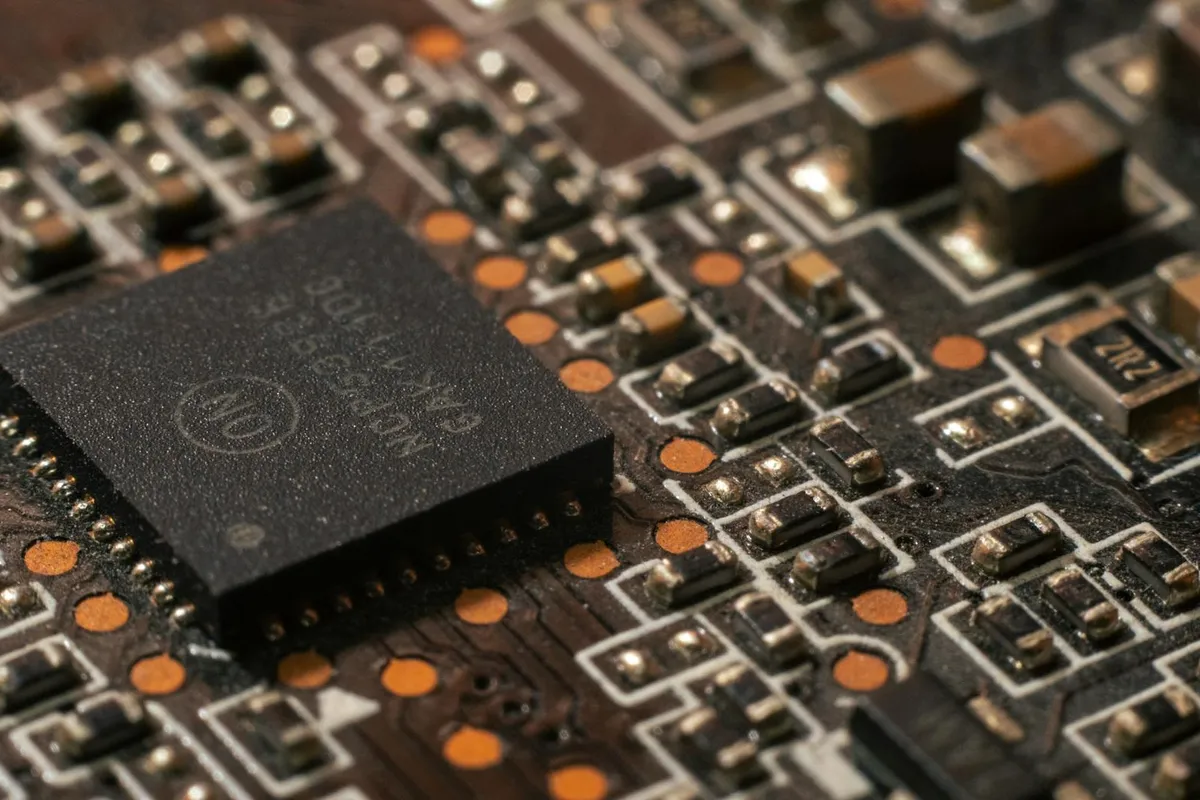
Cerebras Systems just filed for an initial public offering. The California-based AI chip startup enters public markets with a remarkable portfolio: a deal with Amazon Web Services to deploy Cerebras chips in their data centers, and a partnership with OpenAI reportedly worth over $10 billion.
For Moroccan and African entrepreneurs building AI solutions, this isn't just financial news. It signals a restructuring of the AI infrastructure market that could finally break NVIDIA's monopoly and lower the cost of accessing advanced computing capabilities.
Why Cerebras Changes Everything
Cerebras developed the WSE-3 (Wafer Scale Engine), the largest chip ever manufactured. With 4 trillion transistors on a single silicon wafer, it surpasses NVIDIA H100 GPUs by a factor of 50 in compute surface area.
This architecture enables:
- Training massive models: LLMs with hundreds of billions of parameters can be trained on a single Cerebras machine, versus clusters of thousands of NVIDIA GPUs
- Reduced latency: No inter-chip communication eliminates network bottlenecks
- Energy efficiency: Power consumption 5-10x lower for equivalent workloads
The AWS deal announced in 2025 marks Cerebras's entry into mainstream cloud computing. Businesses will soon access these capabilities without upfront hardware investment, a game-changer for SMEs that can't afford GPU clusters.
Impact on AI Costs for Businesses
Today, training a medium-sized language model costs between $500,000 and $5 million in cloud GPU rental. Fine-tuning an existing model for a specific use case runs $10,000-50,000 depending on complexity.
Cerebras on AWS should create competitive pressure that benefits end users:
| Operation | Current Cost (NVIDIA) | Projected Cost (2027) | |-----------|----------------------|----------------------| | Fine-tuning 7B LLM | $15,000 | $5,000-8,000 | | Inference 1M tokens | $3-5 | $1-2 | | Custom model training | $500,000+ | $200,000+ |
These projections are based on Cerebras's stated energy efficiency and expected post-IPO economies of scale.
What This Means for Moroccan SMEs
For Moroccan businesses considering AI projects, several practical implications emerge.
1. Delay Major Hardware Investments
If you were planning to purchase GPU servers for internal AI projects, wait. The AI hardware market will undergo significant disruption over the next 18 months. NVIDIA GPU prices could drop 20-30% as competition intensifies.
2. Prioritize Cloud-Native Architectures
Build your AI solutions on architectures that can switch between compute providers. Use frameworks like PyTorch or JAX that support multiple hardware backends, rather than locking into proprietary ecosystems.
3. Explore Fine-Tuning Open Models
With expected inference cost reductions, fine-tuning open source models like Llama 3 or Mistral for your specific use cases becomes economically viable. A 7 billion parameter model fine-tuned on your business data can match GPT-4 for your specific tasks at a fraction of the cost.
If you're looking to integrate AI into your processes, our AI automation service can help you evaluate and deploy solutions suited to your context.
The AI Chip War Intensifies
Cerebras isn't alone in this market. Several players are emerging to challenge NVIDIA's dominance:
- Groq: LPU chips optimized for inference, already available via cloud API with record response times
- AMD: MI300X gaining ground in data centers, with growing adoption at Microsoft and Meta
- Google: TPU v5p reserved for Google Cloud services but powering Gemini models
- Amazon: Trainium and Inferentia, custom chips for AWS, used internally for Alexa and Bedrock services
- Intel: Gaudi3 targeting the enterprise segment with aggressive pricing
This diversification is excellent news for AI compute consumers. Dependence on a single vendor (NVIDIA currently controls over 80% of the AI GPU market) created supply chain risks and kept prices artificially high.
The geopolitical context adds additional urgency. US restrictions on exporting advanced chips to certain countries push companies to diversify their supply sources. Having multiple AI compute providers becomes a matter of strategic resilience, not just cost optimization.
Implications for Automation Projects
Businesses deploying AI-based automation solutions will directly benefit from this market evolution.
Chatbots and Virtual Assistants
Inference costs represent 60-80% of the total cost of ownership for a production AI chatbot. A 50% reduction in inference costs makes intelligent chatbot deployment viable even for SMEs with moderate volumes.
Document Analysis
Processing documents (OCR + comprehension) via multimodal models becomes accessible for larger volumes. An SME processing 10,000 invoices monthly could automate data extraction for under $500 per month.
Personalization at Scale
Product recommendations, content personalization, and AI-based customer scoring become profitable for catalogs and customer bases of all sizes.
How to Prepare Now
Without waiting for Cerebras chips on AWS, several actions can prepare your business:
Audit Your Potential AI Use Cases
Identify repetitive processes, manual analyses, and pattern-based decisions. These tasks are automation candidates. Prioritize by business impact and technical complexity.
Train Your Teams on Fundamentals
Understanding AI concepts (prompt engineering, fine-tuning, RAG) is becoming a standard business skill. Invest in upskilling your technical and business teams.
Build Your Datasets
Performant AI models require quality data. Start structuring and cleaning your business data now. A clean dataset of 10,000 examples is worth more than a generic model.
Choose Flexible Partners
Work with AI providers who master multiple platforms and can migrate your solutions to the most competitive infrastructures over time.
Timeline to Watch
The Cerebras IPO should materialize in H2 2026, with an estimated valuation between $8-12 billion. Key milestones to follow:
- Q2 2026: Roadshow finalization and IPO pricing
- Q3 2026: Trading begins, likely on NASDAQ
- Q4 2026: First Cerebras instances available on AWS (preview)
- 2027: General availability and integration into mainstream cloud offerings
These timelines may vary, but the trend is clear: AI compute will become more accessible and cheaper.
The Broader Market Context
Cerebras's IPO arrives at an inflection point for AI infrastructure. Global spending on AI chips reached $72 billion in 2025, up from $45 billion in 2024. Demand continues outpacing supply, with wait times for NVIDIA H100 clusters stretching to 6 months or more.
The memory shortage compounds the problem. According to industry reports, even as suppliers ramp up DRAM production, manufacturers will only meet 60% of demand by end of 2027. Some analysts predict shortages could persist until 2030.
This supply-demand imbalance explains why alternatives like Cerebras can command billion-dollar valuations. Any technology that reduces compute requirements or improves efficiency addresses a genuine market need.
For African Tech Ecosystems
Morocco's Maroc Digital 2030 initiative and similar programs across Africa emphasize AI adoption. But infrastructure access remains a bottleneck. Most African businesses rely on international cloud providers with no local data centers, adding latency and data sovereignty concerns.
The Cerebras/AWS partnership doesn't directly solve the data sovereignty issue, but it accelerates the trend toward more efficient cloud AI. As costs decrease, more African businesses can justify AI investments that previously made no economic sense.
Regional cloud providers and tech hubs should monitor this evolution. The efficiency gains from new chip architectures could make local AI infrastructure more feasible within the next 3-5 years.
The African Context: Opportunities and Challenges
Africa represents a fast-growing market for AI technologies. According to African Union projections, the AI market on the continent should reach $12 billion by 2030.
For African entrepreneurs, the chip market evolution presents specific opportunities:
Easier cloud AI access: With AWS deploying Cerebras and other providers strengthening their offerings, African businesses will access the same capabilities as their Western counterparts, without prohibitive local infrastructure investment.
Priority local applications: AI models for African languages, precision agriculture, and mobile health are areas where Africa can develop distinctive expertise. Lower compute costs will make these projects more economically viable.
Training and talent: Morocco, with its expanding tech ecosystem and quality engineering programs, is well-positioned to become a regional AI skills hub. Moroccan universities already train data scientists capable of leveraging these new infrastructures.
Related Resources
Comparing providers? Check out our detailed comparison:
Conclusion: A Turning Point for Accessible AI
Cerebras's IPO symbolizes the maturation of the AI infrastructure market. After a decade dominated by near-monopoly NVIDIA, competition is finally arriving.
For Moroccan and African SMEs, this represents an opportunity to catch up on AI adoption. The barriers to entry, primarily compute costs, will progressively lower.
The winning strategy: stay agile, invest in skills and data, and wait for the market to mature before major infrastructure investments. Companies preparing today will be first to capture value when costs drop.
FAQ
When will Cerebras chips be accessible to SMEs?
Via AWS, Cerebras instances should be available in preview late 2026 and generally available in 2027. In the meantime, businesses can use the Cerebras Inference API for model inference.
Will Cerebras replace NVIDIA for all AI use cases?
No. Cerebras architecture is optimized for large language models and massive neural network training. For many applications (vision, real-time processing, edge computing), NVIDIA GPUs remain relevant. It's the diversification of options that benefits users.
What impact on current AI projects in Morocco?
Short-term (12-18 months), impact is limited. Current projects can continue on existing infrastructure. Medium-term, new compute options will allow deploying larger models or reducing operating costs. Plan for modular architecture that can evolve.
How do I evaluate if my business is ready for AI?
Start with an audit of your data and processes. Do you have structured, quality data? High-volume repetitive processes? Pattern-based identifiable decisions? If yes, you have AI automation candidates. Specialized guidance can help prioritize and structure your approach.
Should I wait for price drops to launch an AI project?
Not necessarily. Some high-ROI AI projects are already profitable at current prices. The key is calculating return on investment for your specific use case. Low-ROI projects today will become viable tomorrow; high-ROI projects have no reason to wait.